make preferable
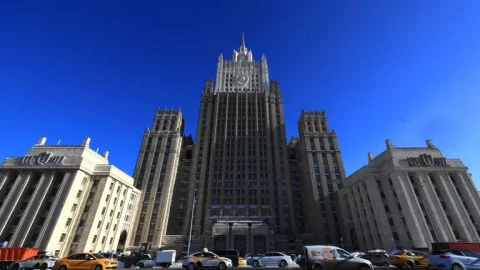
Armenia's thoughtless steps may make it impossible to return to joint work with Russia and other countries of the Collective Security Treaty Organization (CSTO) toward creating a single defense area. Russian Deputy Minister of Foreign Affairs Mikhail Galuzin stated this in an interview with TASS.
According to him, apparently, Yerevan would like to "take advantage of the moment in the conditions when the West shows great interest in strengthening cooperation, including in the security sector."
"However, thoughtless decisions that will provide Westerners with full access to national databases, sensitive information for the country's security, not only threaten the sovereignty of the state, but may also make it objectively impossible to return to joint work with Russia and other CSTO allies toward building a single defense area," stressed the Russian deputy FM.
Galuzin expressed confidence, however, that Armenia's full participation in the work of the CSTO first of all meets the interests of the Armenian people and serves to maintain peace and stability in the South Caucasus.
"Membership in the organization, as well as close ties with our country in the military sector, have become a key factor in the progressive development of independent Armenia in recent decades," said the Russian deputy FM. “No matter what the Westerners—who are more active in flattering Yerevan—promise, today there is no viable alternative to the CSTO as a mechanism for ensuring Armenia's security."
In the case when Russia is really interested in establishing a solid peace with its neighbors in the South Caucasus, the goals of the West are radically opposite, Galuzin stated.
"One of the main tasks [for the West] is the disruption of the integration processes in Eurasia, our shared integration projects—the CSTO, the CIS, the EAEU—are a bone in their throats," said the Russian deputy FM. "For the sake of achieving that goal, Washington and its allies are ready for any step, including the destabilization of the internal political and socioeconomic situation of Russia's neighbors."
Galuzin added that it is beneficial for the West to maintain the foci of tension in the post-Soviet space in order to weaken Russia, which, in fact, "remains the main guarantor of security here."