make preferable
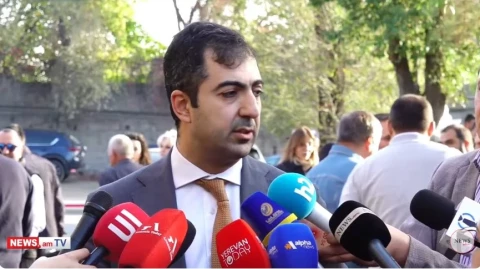
I can't go into the details, I guess, once the discussion gets going to some extent because for now we are talking about proposals, then it will be possible to talk about them publicly. Sargis Khandanyan, an MP of the ruling majority Civil Contract Faction and Chair of the Standing Committee on Foreign Relations of the National Assembly of Armenia, told this to reporters Friday—and referring to PM Nikol Pashinyan's statement Thursday that the Armenian party had made proposals to Azerbaijan.
"The spirit of these proposals stems from the Crossroads of Peace project [of the Armenian government] and the ideas that the Armenian government has presented in these recent years. Those proposals are based on the same principles; that is, Armenia's sovereignty and jurisdiction," said Khandanyan.
To the question as to how the Armenian PM could say that a mutually acceptable solution is possible if there is no response yet from Azerbaijan, Khandanyan answered as follows: "From the conversation that took place in Kazan [in Russia], and I assume certain details were discussed there. After that you very correctly note there may be a mutually acceptable. When we get the feedback [from Azerbaijan], it will already become more material—if possible."
Regarding the remark that it turns out that a document is being negotiated on regional de-blockade, which is not within the framework of the peace treaty expected to be signed with Azerbaijan, the Armenian ruling force MP said: "It is not a document from the point of view of international law, but a direct correspondence. In the peace treaty, the de-blockade section has been separated."
As for signing a strategic deal with Azerbaijan, which the Armenian premier spoke about Thursday, Khandanyan said: "The same principles that we are talking about, that the [two] countries must mutually recognize and, in fact, it was also specified in the form of an international treaty with the border delimitation regulation, mutual territorial integrity and sovereignty, do not interfere in each other's internal affairs and try to normalize relations so that the normalization of relations be beneficial for both sides. And here the part of de-blockade is very important because in case of de-blockade, there will be movements: communication, logistic movements, which will bring benefits to both Armenia and Azerbaijan."
To the question as to why it is necessary to sign a strategic deal separately with Azerbaijan, Khandanyan responded: "When saying ‘strategic deal,’ it's not about signing a document, it's about giving the scope of all those negotiations and the realities being discussed such a logic that in the end they will be mutually beneficial."
Khandanyan noted that now they have to wait for a more material response from Azerbaijan, then make conclusions.
"As you know, such a solution is unacceptable for Armenia. And whenever we talk about a ‘mutually beneficial solution’ or a ‘mutually acceptable solution,’ it rules out any corridor logic," said the Armenian ruling power lawmaker.