make preferable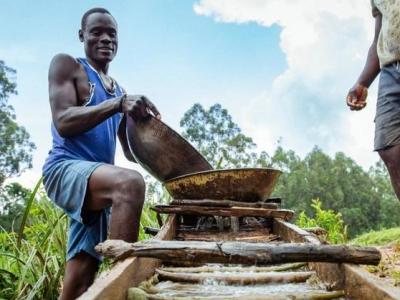
Mercury used in gold mining contaminates food crops not by seeping into the soil, as previously thought, but directly from the atmosphere, conclude scientists from Canada and Nigeria. The study was published in the journal Biogeosciences.
The research was conducted in an agricultural community near small-scale gold mining operations in Nigeria. Scientists compared plants grown 500 meters from the mine with crops located 8 kilometers away. The difference was striking: mercury levels in leaves and grains near the mine were 10–50 times higher.
Using stable isotope analysis of mercury, researchers demonstrated for the first time that the main contamination pathway for plants is not through the roots, but via the leaves. During photosynthesis, plants literally “absorb” mercury from the air.
“Plants play an important role in removing mercury from the atmosphere,” said co-author David McLagan from Queen’s University. “However, when it comes to edible crops, this becomes a health risk for humans.”
The highest mercury concentrations accumulated in the leaves—the parts often consumed by humans and animals. Root crops, such as cassava, and grains including maize contained lower levels, but still exceeded background concentrations. Although the detected levels remained below international limits, scientists warn that real risks may be higher because safety standards are based on reduced local food consumption estimates.
Mercury is a potent neurotoxin. Even low doses over long periods can cause nervous system dysfunction, impair memory and attention, and increase the risk of cardiovascular and reproductive diseases.
“Miners will not stop using mercury until an affordable and accessible alternative is available,” said co-author Abiodun Odukoya Merin, professor at Lagos University.
The researchers call for a review of international measures under the Minamata Convention on Mercury (ratified in Armenia in 2017). Current monitoring primarily focuses on water, sediment, and seafood, but not agricultural produce. They emphasize the urgent need for strategies to control air pollution in gold mining areas, warning that without action, millions of people could face chronic mercury exposure from common foods, including maize, cassava, and leafy greens.