make preferable
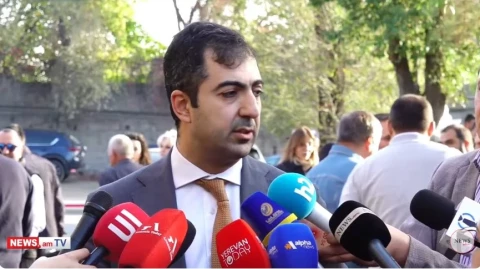
To tell the truth, I am not aware of the details, I am not sure that only the ambassadors of the CSTO member countries were there. But during the diplomatic service, the ambassadors carry out such functions also and meet with the officials of the host countries, including the foreign ministers. Sargis Khandanyan, an MP of the ruling majority Civil Contract Faction and Chair of the Standing Committee on Foreign Relations of the National Assembly of Armenia, told this to reporters Friday.
Khandanyan noted this when asked why the Armenian ambassador to Russia, Gurgen Arsenyan, had attended Russian FM Sergey Lavrov’s meeting with the ambassadors of other CSTO member states to Russia, taking into account that it has been more than a year since the Armenian party does not attend any meeting within the framework of CSTO.
"We [i.e. Armenia] do not participate in the work of the CSTO at the high, the highest level—also at the parliamentary level," added Khandanyan.
Regarding the question as to whether it can be assumed that a process of improving Armenia’s relations with Russia is starting, Khandanyan said: "The relations between Armenia and Russia have always been close under various circumstances and in various domains, and they continue to be so. But there are problems, issues, topics on which there are disagreements and on which the representatives of the Armenian government are talking with the representatives of the Russian government. Here I don't believe there are any dynamic changes in those relations."
And when asked if Armenia was negotiating on the option of implementing regional de-blockade in phases, Khandanyan responded: "Actually, there are no restrictions there; it can be phased, it can be general, which will be possible to implement more efficiently, easily, and in a climate of mutual trust. Armenia is open to that discussion; the important thing is to keep those principles in reality."