make preferable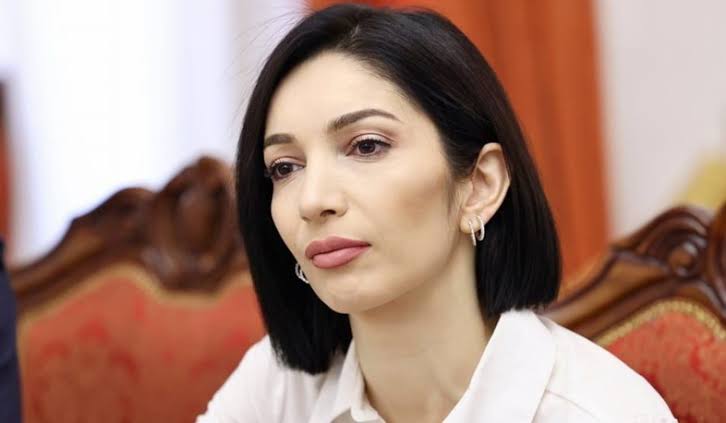
Taguhi Ghazaryan, a member of the majority “Civil Contract” Faction of the National Assembly of Armenia, in an interview with Factor TV, touched upon the border delimitation process between Armenia and Azerbaijan, the possible exchange of enclaves and exclaves between them, the possibility of holding a referendum in Armenia on this matter, as well as Armenian-Russian relations.
Speaking about the principles of the border delimitation process, the MP reaffirmed the position of the Armenian authorities.
“Our position is that our territorial integrity and the territorial integrity of Azerbaijan must be preserved with the same degree of accuracy—centimeter, millimeter—but there may be places where there may be certain shifts due to vital infrastructure,” she said.
Touching upon the issue of enclaves and exclaves, Ghazaryan noted that there have always been several theoretical options, but the option of exchange voiced by Armenian Prime Minister Nikol Pashinyan is the most acceptable.
“One option has always been theoretical: one that the territory of each will be preserved as it was during the Soviet Union… the other that we will make an exchange with the corresponding surface areas… The prime minister’s statement mentions the third option, and I would say our position is that it is the most effective, most peaceful, calm, risk-free option: Artsvashen [village is given] to Azerbaijan, three enclaves [are given] to Armenia,” she noted.
Armenian Prime Minister Nikol Pashinyan on Wednesday announced that the issue of enclaves and exclaves between Armenia and Azerbaijan will be resolved by exchanging territories. He claimed that he got the impression of the feasibility of this vision of peace from his contacts recently with Azerbaijani President Ilham Aliyev in Turkmenistan.
“There should be no enclaves and exclaves on either side of the border; that is, the two countries should carry out an exchange territories of the appropriate exact size,” he said.
Asked whether the exchange of territories implies holding a constitutional referendum in Armenia, the Armenian ruling force’s lawmaker noted that there are two legal interpretations, but if necessary, the authorities will take that step.
“I am not sure that I am right in arguing for this now, I am saying that there are both options and there is a possibility that there may be a need for a referendum [in Armenia], and for the people [of Armenia] to also agree to that option. And the political leaderships have reached a mutual agreement with each other, and if there is such a need, of course, it will pass [through a referendum],” she said.
Speaking about Armenia’s relations with Russia and regional security, Taguhi Ghazaryan emphasized that decisions in Armenia are made exclusively by its people.
“The people of the Republic of Armenia decide whether it will have enemies or will not have enemies. The Republic of Armenia has decided that it does not want to be an enemy of Russia… We want to have normal relations with all partners,” she said.