make preferable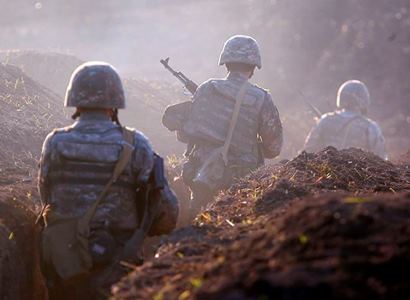
One of the world's longest-running territorial disputes in the Caucasus mountains has resumed after 20 people died in fighting on the border between Armenia and Azerbaijan last week, the author Max Seddon writes in his article published in The Financial Times.
“The sudden escalation comes as both countries are struggling to contain the coronavirus pandemic: Armenia, which has a population of just 3m, has recorded nearly 35,000 Covid-19 cases. Meanwhile, energy-rich Azerbaijan’s economy has taken a hit from falling oil prices,” the author noted.
“Negotiations aren’t yielding any results. That raises the tensions on international border areas, so each side has been expecting the other to attack,” Zaur Shiriyev, Caucasus analyst for the International Crisis Group said.
“There is no one capable of deterrence or restraint,” said Richard Giragosian, director of the Regional Studies Center, a think-tank in Yerevan. “The real question is less about international mediation and much more about how far Armenia and Azerbaijan want to continue this escalation. Armenia now feels compelled to respond, and we are in a tit-for-tat situation that is spiralling out of control.”
As the author noted, "hope for reconciliation rose in 2018 after Armenia’s “velvet revolution” ousted longtime president Serzh Sargsyan, head of a “Karabakh clan” that had tightly controlled the country for years, and brought protest leader Nikol Pashinyan to power.
Armenia and Azerbaijan launched direct communication channels to minimise shooting incidents at the front lines and declared early last year they would “prepare the population for peace”.
Azerbaijan’s hopes that Mr Pashinyan, an ex-journalist with no ties to Nagorno-Karabakh, could fundamentally narrow the gap between the countries’ positions on the conflict may have been misplaced. Mr Pashinyan visited Nagorno-Karabakh a day after becoming prime minister and has returned several times since, including a trip for the inauguration of the enclave’s new de facto president in May."
“All of those moves suggest that there’s going to be no change in Armenian policy, which is received in Azerbaijan as the continued policy of annexation,” said Laurence Broers, Caucasus programme director for Conciliation Resources. “The longer the conflict goes on, the less likely it is that Azerbaijan is going to get minimal concessions or results, never mind the return of Nagorno-Karabakh itself.”
According to the author, Mr Pashinyan’s 'rhetoric is less bellicose than his predecessor’s.'
"His wife, journalist Anna Hakobyan, launched a social media campaign to stop the fighting. But public tensions remain high in Azerbaijan after this week’s clashes claimed the life of Azerbaijani Major General Polad Hashimov, the highest-ranking officer to be killed in the conflict since the wars," he added.
The author of the article added that Azerbaijani President Ilham Aliyev fired his foreign minister, who, according to him, had “been involved in some useless negotiations” trying to provide access to officials of the World Health Organization to assist in the fight against the pandemic in Karabakh.
“What kind of negotiations over Covid can we be carrying out with an enemy country, and country at war with us? It’s absurd,” Mr Aliyev said. “It means we are going to start co-operating with Armenia?!”