make preferable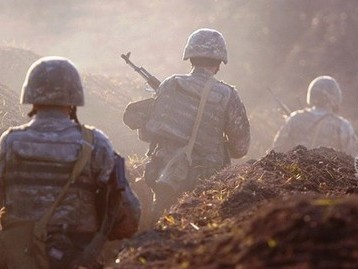
Russia and the US are co-chairs of a group that seeks to negotiate a peace deal between two countries engaged in a non-trivial war, David Ignatius writes in his Washington Post article.
This little-known event includes a long-frozen confrontation between Armenia and Azerbaijan, which turned into a hot war this month with artillery firefights across the border. This has led to a rare convergence of interests between Russia and the US, the two co-chairs of the Minsk Group, which seeks to resolve the conflict.
What makes this difficult diplomacy even more complicated is that it involves Turkey, a pugnacious regional power that has become a headache for both Moscow and Washington. Turkey threatened to intervene in the Armenian-Azerbaijani battle and took up arms against the Armenian community in Lebanon. For Armenians, this carries the chilling echoes of the 1915 genocide under the rule of the Ottoman Empire, which Turkey never recognized.
Russian and American diplomats similarly reacted to the July 12 shooting near Tavush on the Armenian-Azerbaijani border.
Secretary of State Mike Pompeo has called for talks through the Minsk Group, apparently in cooperation with Russia.
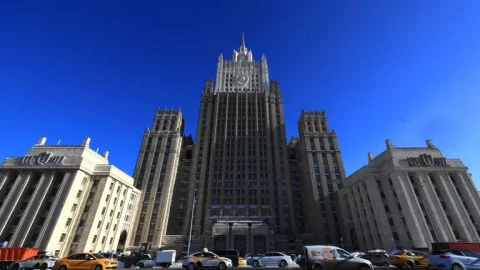
The Russian MFA issued a similar statement on July 13, expressing serious concern over the escalation of hostilities, calling for a ceasefire, and offering to help ease tensions. On July 15, the Minsk Group, including France, the third co-chair, called for meaningful talks.
Over the past week, a shaky undeclared ceasefire has prevailed along the border, with reports of incidental clashes and gunfire.
The US has a wide range of conflicting goals in the region, which means that any diplomatic engagement will be a kind of twisted ball. First, the level of US relations with Russia has plummeted almost to the point of the Cold War. President Trump has said since 2016 that he would like to improve relations. But any direct action against Russia now will be controversial, and Trump is unlikely to try to do so if the political costs are too high. But the Minsk Group may be a politically viable option.
It would be a mistake to allow this small war to grow until it becomes big, with the threat of the death of thousands of Armenians and Azerbaijanis.