make preferable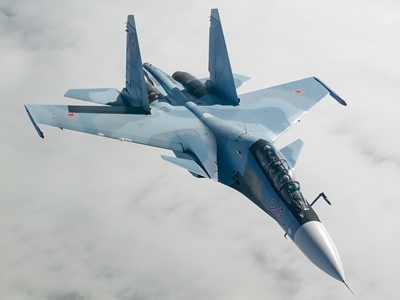
The recent India-Pakistan War featured the latest Chinese-origin jets stacked against a combination of Russian and French fighter jets. While the much-hyped J-10C vs Rafale clash cornered all the headlines, no less interesting was the contest between the JF-17 Thunder and Su-30MKI, a highly customized Indian variant of the Russian Su-30, wrote «EurAsian Times».
Now, it seems that the two fighter jets can square off against each other at another volatile geopolitical flashpoint, this time in the Caucasus.
Pakistan recently signed a US$4.6 billion defense agreement with Azerbaijan to supply 40 JF-17 Thunder fighter jets, along with a US$2 billion accompanying investment package. Azerbaijan had initially ordered 16 JF-17s from Pakistan, but the new contract expands that purchase to 40 aircraft.
The JF-17 Thunder is a single-engine multirole combat aircraft jointly developed by Pakistan and China. It was developed by the Pakistan Aeronautical Complex (PAC) and China’s Chengdu Aircraft Corporation (CAC). The JF-17 is designed for various roles, including interception, ground attack, anti-ship operations, and aerial reconnaissance.
The deliveries of the 40 jets are expected to take place in phases over the coming years, including training programs for Azerbaijani pilots and technicians.
The addition of 40 JF-17 Thunder fighter jets to Azerbaijan will be a significant capability boost to its Air Force.
Notably, Azerbaijan is embroiled in a long-running conflict with Armenia, much like the India-Pakistan conflict.
Since 2020, Azerbaijan and Armenia have fought three short wars. First in September 2020, then in September 2022, and finally in September 2023, resulting in Baku extending its control over the Nagorno-Karabakh corridor, which was internationally recognized as Azerbaijani territory but was populated by ethnic Armenians and was under the control of Armenia.
Since then, there has been a fragile peace on the border. However, the situation remains tense, and both countries are engaged in an arms race.
Additionally, there is the outstanding issue of the Zangezur Corridor, a proposed route linking Azerbaijan to its Nakhchivan exclave, bypassing Armenia’s Syunik Province.