make preferable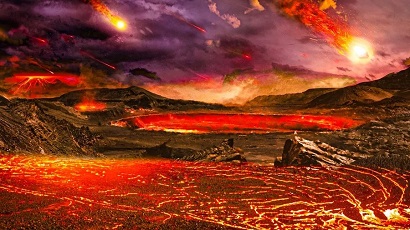
For decades, scientists believed that the massive collision between early Earth and a Mars-sized body (the hypothetical Theia) had destroyed nearly all traces of the planet’s original version, the so-called “proto-Earth.”
However, a new study published in Nature Geoscience suggests that fragments of this earliest Earth may have survived to the present day.
A team of researchers analyzed ancient rock samples from Greenland, Canada, and Hawaii. They found anomalous potassium isotope compositions, particularly a deficit in potassium-40 compared to modern terrestrial rocks.
According to models, when Theia collided with proto-Earth, the planet melted and its chemical composition was extensively reworked. Most traces of the original material were assumed to be destroyed or widely redistributed. Yet the discovered samples carry chemical “fingerprints” that the authors suggest could have survived from that primordial era.
The study combined chemical analysis with computer modeling to simulate how potassium isotopes might have been redistributed under the immense impact and thermal processing. The models concluded that the samples could not have formed through ordinary geological processes or meteorite accumulation. The most plausible explanation is that they represent fragments of the proto-Earth.
The authors note that these remnants provide a unique glimpse into the composition of our planet before the dramatic collision and offer insights not only into Earth’s early history but also into planetary formation in general.