make preferable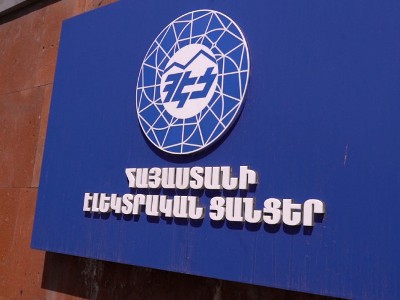
According to the law, the institution of the temporary manager of the Electric Networks of Armenia (ENA) company continues to operate until the entire process has reached its logical conclusion, and the logical conclusion is when the state negotiates with the owner company or with that company’s board of directors, after which the transfer of ownership rights will take place, and then the state itself will decide what new status to give to that nationalized company. Mesrop Mesropyan, Chairman of the Public Services Regulatory Commission (PSRC) of Armenia, told this to a press briefing after the PSRC meeting Monday, in which it was decided to revoke the ENA’s license.
“As for that new status, at this moment at least three options appear in my mind. Time will show which path the state will choose. Option 1: they may sell [it] to another company; option 2: they may give [it] to a consortium for management, with the state holding a share; option 3: they may keep [it] state-owned. Time will show which option it will be,” added Mesropyan.
When asked what financial burden the state assumes with this decision, the PSRC chairman noted that he cannot state a figure now, because the course of the three-month negotiations with the state will show it, and it will become clear what compensation price will be formed there.
As reported earlier, at Monday’s session, the PSRC decided to revoke the ENA’s license that had been issued to Tashir Capital company of the Tashir Group of companies. Four members of the PSRC had voted in favor of the decision, but one had voted against. The dissenting vote had come from Ara Nranyan, a former MP and former member of the opposition Armenian Revolutionary Federation (ARF) Dashnaktsutyun Party.
The ENA supervisory committee on November 11 had warned the Armenian authorities against such a decision, and called it a forcible seizure of the company “for which the [Armenian] public will pay.”
The Tashir Group belongs to Russian Armenian businessman and philanthropist Samvel Karapetyan, who is jailed in Armenia on charges of calling for a coup d’état in the country. Karapetyan and his supporters, however, deny these accusations, and describe the respective actions of the Armenian authorities as persecution.