make preferable
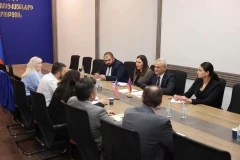
A discussion on new impulses of eastern policy by the European Union and Germany in the South Caucasus was held at the German Council on Foreign Relations (Deutschen Gesellschaft für Auswärtige Politik - DGAP). RA Ambassador to Germany Armen Martirosyan made a speech at the forum. He presented the latest developments in the South Caucasus, further possible steps of the EU and Germany in the region, official Yerevan’s position on the Nagorno-Karabakh problem and Armenian-Turkish relations.
German political figures and foreign diplomats, political scientists, economists and businessmen attended the event.
An international conference, Securing Germany’s and Europe’s supply of raw materials, was held at the German Bundestag. The conference was organized by the CDU/CSU parliamentary group. Chairman of the CDU/CSU parliamentary group Volker Kauder, chairman of the Junge Union, the youth organization of the CDU Philipp Mißfelder and other MPs spoke at the conference.
Ambassador Martirosyan made comments at the discussions. He pointed out that uninterrupted supply of raw materials implies the availability of raw materials in particular countries and opportunities for export to Europe, which is of special importance for landlocked countries like Armenia. In this context, he pointed out the transit countries’ responsibility under international law – ensuring uninterrupted export and import of raw materials from and to the landlocked countries. Ambassador Martirosyan presented the activities the German enterprise “Chronimet” is carrying out in Armenia. The enterprise is the main supplier of molybdenum to Europe.
The RA Ambassador stressed that Armenia’s blockade by Turkey, which has continued for two decades, affects the supply of molybdenum, especially when communication problems arise in Georgia. Referring to the WB data, Martirosyan pointed out that the blockade causes a rise in transportation prices, which affects German industry’s competitiveness. Removal of the blockade will be of benefit not only to Armenia and Turkish businessmen, but also to European ones, Martirosyan said.