make preferable
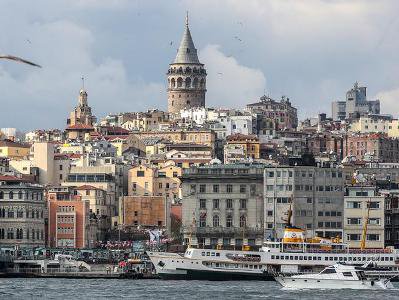
After several years of growing authoritarianism under President Recep Tayyip Erdogan, the victory of the opposition in the election of the mayor of Istanbul instilled a ray of hope that democracy in Turkey has not died, FT reported.
New elections may give Erdogan and his AKP a chance to regain power in the country’s biggest city. But it will be a hammer blow for Turkey’s political and economic standing, regardless of the outcome.
The defeat of the AKP in Istanbul, where Erdogan left his mark on national politics for the first time, was very significant. This indicated that, despite Erdogan’s inclination towards polarization and conspiratorial rhetoric, Turkey remained a valid, albeit imperfect democracy. The decision of an election commission dominated by members of the ruling party casts doubt on this. Claiming that some of the voting committees were improperly appointed, the council called for a second vote on 23 June.
The destruction of institutions led by Erdogan contrasts with his early image of a stable and civic modernizing leader. The attempted coup d'état in July 2016 marked a turning point in Turkey’s departure from liberal traditions. As a result, 77,000 people were arrested and almost 130,000 lost their jobs. The decision of the election commission to cancel the election is another blow to political freedom, the source added.
According to the source, this solution contains some more risks. First, the Turkish people can simply lose all faith in peaceful democratic politics. This is especially likely if the AKP wins the second election. The military, who suffered from the purges after the attempted coup d'état of 2016, may also demonstrate a growing impatience for the AKP - an ominous echo of the past.
Turkey’s economic vulnerability may also be exacerbated. US fees helped last year to draw the country into a recession, from which it has not yet recovered. Inflation is close to 20 percent. News of the new election of the mayor of Istanbul sent the lyre to the lowest level since October.
“There are questions over the country’s ability to defend itself in a new lira crisis after disclosures that the central bank had bolstered its foreign currency reserves with billions of dollars of short-term loans. Foreign investors are already wary of a capricious strongman who installed his son-in-law as finance minister over more seasoned economists. Two more months of uncertainty over the political future of Turkey’s commercial capital will only add to this. Mr Erdogan’s government should be focused on strengthening the economy, not on political skulduggery,” the source noted.
The decision also leaves Turkey’s allies in the west in a bind. A long-time member of NATO cannot be considered a rogue state; it remains an important regional player. Erdogan has angered Washington, not abandoning the purchase of Russian S-400s, which led to the suspension of deliveries of US 100 F-35 fighters. Turkey will increasingly be viewed as a issue that needs to be addressed, and not as a reliable partner, if it cannot support democracy.
Erdogan in recent weeks faced a choice. He could admit that the AKP lost Istanbul due to economic and political setbacks, and promise reform. Instead, he seems to be consumed by a thirst for power, weakening Turkey, both domestically and abroad. The defeat in Istanbul was painful for the president and his party. Undermining election policies will be infinitely more painful for Turkey and its citizens.