make preferable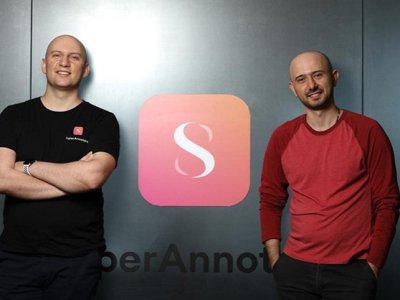
For some, the thought of computers gaining the ability to see and make decisions may induce Black Mirror-style nightmares. But for technologists like Tigran and Vahan Petrosyan, brothers from Armenia, it’s the stuff of PhDs, Forbes reported.
While one brother was working in Switzerland and the other in Sweden, they realized they had the same pain point—the laborious process of capturing and labeling the data necessary to train machines to use computer vision.
Then, a breakthrough: Vahan devised an algorithm that makes it possible to automate parts of the process and speed it up ten times and the brothers knew they were on to something.
After dropping out of their respective programs, the Petrosyans launched software business SuperAnnotate last year to share the tech with others. “It allows us to create larger datasets,” Tigran, now the startup’s CEO, says. “We also help companies manage those datasets, because the quality usually suffers when you are doing this at scale.”
SuperAnnotate covers a substantial part of a computer vision project’s life cycle, Tigran adds, helping companies compile, organize and annotate their data. Thousands of people are using the tools today, SuperAnnotate claims, with revenue recently tripling quarter to quarter.
The SaaS startup raised a $14.5 million Series A round.
TJ Nahigian, a cofounder and managing partner at Base10 Partners, says his team met SuperAnnotate at its beginnings, when Nahigian judged a pitch competition in Armenia that the brothers won.
Base10 was looking to start investing in computer vision and when they realized that many of the startups they talked to were already using SuperAnnotate, the choice became clear. “This is a trend we have been excited about for a long time and it wasn’t until recently that it became technically possible because of companies like SuperAnnotate,” Nahigian says.
According to Petrosyan, one of the startup’s main goals is to make computer vision accessible to non-technical people. “Everyone with a computer and a smart camera can set up their system anywhere they want and have the right infrastructure to build that,” he says. “We want to be that core infrastructure.”