make preferable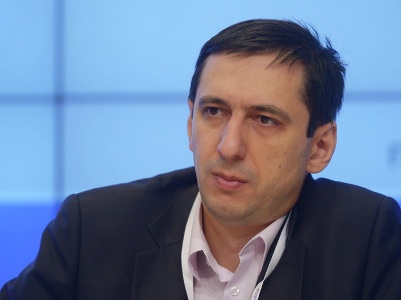
There is still military-political tension in the South Caucasus; moreover, it has become stronger, and there is also uncertainty with respect to various processes which are, in their turn, linked to the Nagorno-Karabakh conflict, the normalization of Armenian-Turkish relations and the attempts of Turkey and Azerbaijan to reinforce their influence in the region, Russian political scientist Andrey Areshev said in an interview with Armenian News-NEWS.am.
According to him, there are many processes that are not sustainable and will move in this or that direction in 2022.
“The region will remain a region that is rather conflictual and is about to explode, in spite of all the attempts to establish diplomatic platforms for unifying the countries of the region,” he said.
The analyst stated that in Armenia various groups are expressing the exact opposite viewpoints on the Nagorno-Karabakh issue and the settlement of the Armenian-Turkish relations, recalling the unequivocal response that Pashinyan’s statements sparked in Armenia, that is, the statements that helped reiterate Baku’s argument about the impossibility of the existence of Nagorno-Karabakh out of Azerbaijan.
Areshev believes the process of normalization of Armenian-Turkish relations under the conditions of Ankara will also spark tension. “Certain discrepancies between Russia and Turkey and between Iran and Turkey will contribute to the tension in the region, in spite of the several attempts to smoothen them. I believe the political and diplomatic efforts, including Russia’s efforts will, nevertheless, provide the opportunity to avoid radical military scenarios in the coming year,” he stated.
As far as the role of the United States is concerned, Areshev believes even though there were certain circles that were behind the previous attempts to normalize the Armenian-Turkish relations, the current stage mainly proceeds from Turkey’s interests which has an interest in the formation of a geopolitical space in the South Caucasus that includes not only Georgia and Azerbaijan with which Ankara has more than positive relations, but also Armenia.
“I believe this will be easier to do during the current administration of Armenia, and Turkey is trying to benefit from this. The attempts of the country’s incumbent authorities to restructure Armenia’s foreign policy are more than noticeable. In case of normalization of the Armenian-Turkish relations, the next step will be to pay more attention to the Russian military base deployed in Gyumri and the Russian military presence in Armenia in general. In this regard, the Armenian authorities need to decide whether they want to regenerate the previous ties with Russia in the security sector or become something like a Turkish vilayet. This is an issue that is out in the open, and in 2022 we will follow the active discussions of members of Armenian society about the paths for the country’s development, including foreign policy,” Areshev emphasized.
According to him, Pashinyan’s long-term power in Armenia will be strictly dependent on support from abroad.