make preferable
The direst situation in terms of the judicial system among the three South Caucasus countries is in Azerbaijan.
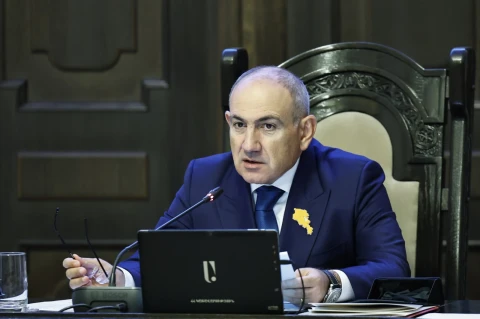
At the annual meeting of the European Association of Judges (EAJ) being held in Yerevan, the capital of Armenia, Siranush Sahakyan, president of the International Comparative Law Center and the lawyer representing the Armenian prisoners’ interests at the European Court of Human Rights (ECtHR), presented some respective figures based on US State Department reports and ECtHR decisions.
Accordingly, Sahakyan said the process of reforming the judicial system in Armenia is proceeding without a strategy, and the Supreme Judicial Council is not perceived as an independent body.
In Georgia, the legal system is controlled by a judicial clan, which makes decisions on the distribution of cases, the appointment of judges, and career advancement.
The situation is even more deplorable in Azerbaijan, where the courts are used by the country’s authorities as a tool of pressure. Decisions are made on the basis of extracted "confessions," and the media and the opposition are persecuted. There are at least 250 political prisoners in Azerbaijan.
According to official data, the ECtHR has made 27 decisions against Armenia on human rights violations, 93 against Azerbaijan, and 15 against Georgia.
The ECtHR has made 31 decisions on violations of Article 18 of the European Convention on Human Rights. And eleven of them—that is, more than a third—are against Azerbaijan, which also speaks of total political interference in that country.
As for the implementation of ECtHR decisions, Armenia has implemented 140 out of 214 such decisions, or 65 percent. Georgia has implemented 118 out of 194 decisions, or 61 percent. But Azerbaijan has implemented only 192 out of 535 decisions, or 36 percent. In other words, Azerbaijan is not respecting its international obligations here either.