make preferable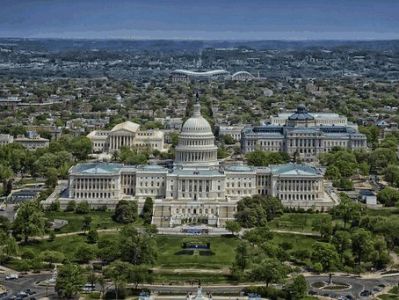
YEREVAN. – The change of the US policy in regard to the entire post-Soviet area, including the South Caucasus and Ukraine, is possible, after Donald Trump's officially takes the office. This area will be of less importance for the new administration, at least at its initial stages of governing. This opinion was expressed by the Russian political scientist Alexander Skakov in an interview with Armenian News - NEWS.am.
According to the expert, these regions, as mentioned by Trump, are not included in the scope of the vital interests of the US.
“Everything will continue as before. Georgia and Ukraine will continue staying in the fairway of the US politics, but they will receive less support - financial and military - from Washington. Of course, Washington currently does not recognize the independence of Crimea and Abkhazia, but these questions will soon become irrelevant. Instead, other areas will affect the importance of the US policy: China, Southeast Asia and India, North Africa, the fight against terrorism and radical Islam. Here, the new administration will look for ways of a dialogue and cooperation with Moscow. Another thing is that the administrations of Bush, Clinton, and Obama have also began looking for ways of cooperation with Russia, but ended up with tough confrontations. It is obvious, that here a lot depends on Moscow. The Russian government should manifest itself as a partner who is reliable, right, and is able to negotiate. Trump is a businessman, and as a businessman he will appreciate it. And, of course, the beginning of a new full-scale war in the region is not in the interests of any US administration,” said Alexander Skakov.
At the same time, the expert noted, that there are no grounds to expect a breakthrough in the Nagorno-Karabakh settlement in 2017.
“We must also take into account, that the possibilities of Russia, due to the ongoing economic crisis, are limited. Washington may come into a more direct confrontation with China, and in such circumstances, it will be senseless to continue the confrontation with Russia. The EU is likely to move towards nationalism and isolationism. The time of such politicians-globalists as Merkel has expired.
All these does not mean, that global players would allow this region to slide in a chaos of wars. However, no one would like to waste resources and efforts on establishing here a sustainable ‘peace’,” concluded Alexander Skakov.