make preferable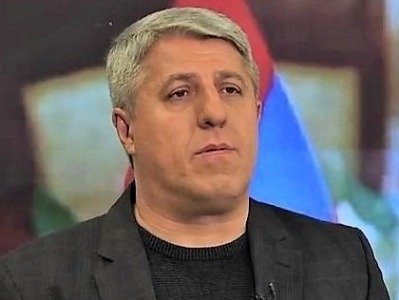
Although the dictator of Baku [Azerbaijan President Ilham Aliyev] is quite successful in capitalizing on the military successes in order to consolidate his power in the domestic political arena amid the general enthusiasm, it is obvious that the subjectivity of the artificial whispering formation of Azerbaijan, no matter how unbelievable it might seem, has actually decreased. Iranian Studies specialist Vardan Voskanyan wrote this on Facebook.
"At the moment, there are actually three non-Azerbaijani armed forces—Armenian, Russian, and Turkish—in the Azerbaijani territory allegedly declared sovereign by the same dictator, the fact of their existence is interpreted differently by the Azerbaijani propaganda, which does not change the current situation at all.
Therefore, after the inevitable decline of the enthusiastic moods [in Azerbaijan], the dictator of Baku will soon have to face the reality which can become extremely volatile, especially when the Russian-Turkish rivalry, to put it mildly, begins to further intensify in Azerbaijan," Voskanyan added.
On November 9, Armenian Prime Minister Nikol Pashinyan, Azerbaijani President Ilham Aliyev, and Russian President Vladimir Putin signed a joint statement on a complete cessation of hostilities— which Azerbaijan had launched on September 27—in and around Artsakh. Accordingly, Russian peacekeepers are deployed in the region to monitor the implementation of the ceasefire and the cessation of hostilities.