Preferred
Domestic policy
On December 10, the Armenian Opposition held “special celebrations” of the International Human Rights Day. It seems to become a tradition in modern-day Armenia’s political life: exactly a year ago the supporters of the Armenian National Congress held a procession in Yerevan. The Opposition insists that the human rights situation is “very bad” in Armenia, referring to the repressions during the tragic post-election period last year and mentioning 15 Opposition members still in prisons. This week some human rights organizations also pointed out the unfavorable situation by signing a joint statement on the occasion of Human Rights Day. The statement contains demands repeatedly been stated by the Armenian authorities’ political opponents: immediate release of all the political prisoners and punishment of all those responsible for the death of people during the tragic events on March 1, 2008. RA Ombudsman Armen Harutyunyan has repeatedly pointed out the lack of progress in human rights protection. However, unlike the Opposition, he accuses the entire society rather than the authorities alone. Meanwhile, on December 10, the political figures supporting the incumbent authorities referred either keeping silent or claiming that the human rights situation is “quite normal” in Armenia. The Opposition is actively working to get the cases involving its active members considered by the European Court – 20 cases have been submitted, and 17 more will reach Strasbourg before next February.
It is clear now that the extra-parliamentary opposition political forces have no intention to hold actions of protest before the New Year celebrations. A representative of the Armenian National Congress (ANC) stated that a rally in support of Editor-in-Chief of the opposition newspaper Haykakan Zhamanak (Armenian Times) Nikol Pashinyan will be held in Yerevan on January 8, 2010. We would remind you that Pashinyan is a parliamentary candidate from Election District #10 and can run for Parliament unless a verdict of guilty is passed on him. The trial itself has recently been rapidly progressing, which demonstrates the authorities’ desire to get him imprisoned as soon as possible thereby preventing his participating in the elections. However, let us not anticipate things, as, with competence, the Defense is insisting on a thorough investigation, attracting additional materials. So we cannot rule out that a final verdict will not be passed by January 10 and upheld by the Court of Appeal. In any case, the ANC’s decision to hold a rally on January 8 is evidence the Opposition continues its policy of refusing to hold rallies of republican scale. The fact that the ANC supporters “like Pashinyan very much” will enable the ANC to hold a large-scale election rally on January 8 – provided, of course, the “hero” is allowed to take part in the elections. On the other hand, practice shows that local election events organized by the Opposition never gather as many people as their counterparts of republican scale.
Nagorno-Karabakh peace process and region
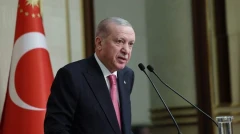
This week has shown Turkey’s reluctance to continue the Armenia-Turkey reconciliation without preconditions. The Turkish Premier made rather unambiguous statements just on the threshold of his visit to the United States. Recep Tayyip Erdogan linked the reconciliation to progress in the Nagorno-Karabakh peace process. Thus he showed blatant disregard for the statements by U.S. and Armenian top-ranking officials, who stressed the necessity for normalization without any preconditions.
The Turkish Premier’s behavior evoked official Yerevan’s response from he mouth of RA President Serzh Sargsyan. “Any delay in ratifying the Armenian-Turkish protocols is fraught with new political obstacles on this way,” the Armenian leader said. He expressed hope that Turkey will not delay the ratification. Otherwise, it will call the long way passed by the two nations into question. The Armenian leader reaffirmed Armenia’s willingness to establish bilateral relations with Turkey without any preconditions. As we can see the Armenian authorities continues showing consistency in establishing peace and stability in the region despite the provocations by their Turkish and Azerbaijani counterparts.
The “starting point” of this policy is quite obvious. The Armenian authorities consider the serious geopolitical changes in the region due to the pressure or initiative of the key geopolitical players. The reason for the changes is large-scale economic projects. Official Yerevan has recently shown its readiness for major concessions on both the Armenia-Turkey normalization and Nagorno-Karabakh peace processes. However, the authorities of the two Turkic states must have perceived the Armenian Government’s position as an opportunity for demanding more substantial concessions, without realizing the fact that official Yerevan had outlined the “highest extent.” As a result, Azerbaijan’s hysteria caused serious problems in the implementation of global geopolitical changes in the region. In this context, the Serzh Sargsyan administration showed all the geopolitical players its readiness for major painful concessions even running the risk of losing its reputation among a great part of the Armenian population. Now, Washington, Moscow and Brussels have to “deal with Azerbaijan” and Turkey, which has allowed itself to be run by its “small brother.”
They will have to, or rather, have already begun. Numerous reports on bloody clashes between the Turkish police and troops and thousands of Kurds in the eastern regions of Turkey have been received. The situation continues destabilizing, posing a threat not only to the ruling Justice and Development Party’s initiative to democratize the Turkish society, but also to the Gul-Erdogan bloc. The simultaneous destabilization in a number of Turkish regions is hardly a coincidence in the context of the Turkish Premier’s “defiant behavior”, which is annoying to many. Turkey has made a number of enemies, including Israel, because of its Premier’s regular attacks. Washington recently realized the need for weakening its “impudent” satellite, which is regularly arguing with its only strategic ally. Considering the overwhelming desire for overthrowing the Justice and Development Party the Turkish top brass and the opposition Republican People’s Party feel, we can say that the Gul-Erdogn bloc is going to face “domestic political trials”, which will make the Turkish authorities change their tone and take a more constructive position in the negotiations with Armenia in the immediate future.
In any case, Premier Recep Erdogan got into a mess by evoking official Yerevan’s sharp response to his statements. Armenian President Serzh Sargsyan gave a rather unequivocal and adequate response. He ordered the relevant branches of power to amend Armenia’s laws dealing with international agreements. "Armenia is ready to honor its commitments by ratifying the protocols. We expect Turkey to make a similar step. “Turkey is trying to link the Armenian-Turkish relations to the Nagorno-Karabakh problem, but the attempts are doomed to failure,” the Armenian leader said. Now the international community has to think of its further steps to “neutralize” the attempts made by Ankara and Baku to that the process of establishing long-lasting peace in the region — Yerevan’s positions is quite clear for them.
On the threshold of the OSCE Minsk Group Co-Chairs’ visit to the region late this week, the Russian side, through the official representative of the RF Ministry of Foreign Affairs Andrey Nesterenko, made it clear it has no intention to torpedo the Nagorno-Karabakh peace process. On the contrary, Russia will do its best to promote the process. “If the progress in the Nagorno-Karabakh peace process registered this year is maintained in the future, we can hope that the fundamental principles will finally be agreed on quite soon to serve as a basis for a peace treaty,” Nesterenko said. He pointed out that Armenia and Azerbaijan are on their ay to a breakthrough in the Nagorno-Karabakh peace process. Nesterenko made a noteworthy statement: the Russian side has not received any signs of discontent with the OSCE Minsk Group from Azerbaijan.
The statement proves the fact that Moscow is well aware or believes that Baku’s bellicose statements are mere “precautions” aimed at forcing the Armenian side into more substantial concessions.
Economy and social life
The Armenian Parliament has adopted the 2010 draft budget by 82 to 16. So the budgeted revenues are 742bn AMD, expenditures 935.5bn and deficit 193.4bn AMD. The budgeted economic growth is 1.2% and inflation rate 4%±1.5%. The new draft budget includes parliamentarians’ proposals and exchange rate adjustments in the context of the macroeconomic situation. However, all the amendments to the draft budget proposed by the ruling coalition and approved were not essential for the document.
This week has seen progress in the European Union’s relations with the three South Caucasus states. On December 8, the EU Foreign Ministers’ Council made a statement on the South Caucasus, which indicated prospects for the three states’ further integration into the European community. At a press briefing a few days later, Swedish Ambassador to Armenia Hans Gunnar Aden stated that one of the points of the EU Eastern Partnership program is simplifying visa regulations with the participating states, which must be put into practice. As regards Armenia, the Swedish diplomat expressed the confidence that the visa requirements will be simplified and even abolished one day. He stated, however, that this point is the last of the tasks the EU has set itself. The most important tasks are democratic development in the states involved in the program and developing cooperation with them.
This Tuesday, RA Minister of Education and Science Armen Ashotyan’s order on 2-week quarantine in Armenia’s schools took effect. The school children will return to school on December 21 only to go on winter holidays in a week. Armenia’s higher schools continue working. The situation is strained by untrustworthy statements made by officials of the RA Ministry of Health, who, in their efforts to prevent panic, only fuel rumors. At the same time, it is not rumors, but doctors’ actual attempts to present the lethal outcomes as results of seasonal, not swine, flue. The more desperate are the attempts the graver doubts they arouse.
New Year, one of the most popular holidays, is at hand. Of note is the Yerevan Municipality’s work to decorate the city this week. Almost all the streets in the Yerevan center are decorated with illuminations creating a cheerful mood. The financial crisis must have “shortened” Armenia’s highest Christmas tree by three meters. Nonetheless, unlike the previous years, the Yerevan center looks beautiful and we can be free to invite guests to Armenia’s capital with clear conscience, which is gratifying. Let us hope that the Yerevan authorities will not “get a swelled head” and continue turning the Armenian capital into a civilized city.
T.P.