make preferable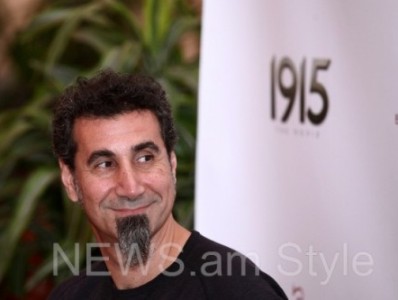
Frontman of System of a Down Serj Tankian has been interviewed by The Bridge newspaper of the American University of Armenia. Here are the excerpts of the interview that is available on the newspaper's website.
Having grown up in the Unites States, in an American culture, how has “Armenianness” become a part of your identity? What makes you an Armenian?
Lineage, genealogy, culture, I think, are what makes you an Armenian. Language has its role in it as well. My friend, Vahe Berberian, gave a great talk recently in the University of Southern California. He had a very interesting take on the importance of maintaining our language, which we all know is necessary. Armenian culture is a big part of me. If you look at history, borders change heads of states change, the color of humanity changes, but the beauty of culture stays, and Armenian culture is a very old, beautiful one.
You speak up a lot about the Armenian Genocide and other injustices. Have there even been situations when you were afraid that someone would warn or threaten you? As politicians don’t usually like political activists
True. I think you have to make a choice. My choice was made early; I was an activist before being a musician. It’s the hypocrisy of the Turkish denial that awakened a call for activism in me. I started getting aware of other people’s human rights problems, environmental problems, and it made me just more aware as a human being. Sometimes I am afraid, but that doesn’t mean that I shouldn’t speak truth to power, we all should. In the end, all nations and people who are in charge have to know the truth.
We remember the Armenian Genocide with pain and there is still mutual hatred and misunderstanding between Turks and Armenians. How do you imagine future Turkish and Armenian relations, especially between youth?
I think any relationship between two people in order to be healthy, should be based on mutual respect and justice. Nations don’t differ in that way. I do see the future where Armenia and Turkey have a good relationship. I do see a future where there is healing, but it has to be done through justice, it can’t be done by forgetting everything. There is a powerful civic movement that is gaining little fraction in Turkey. That should be very encouraging for us and we should work with it, not just in terms of recognition of the genocide, but also in terms of real democratization in Turkey. That way, journalists don’t go to jail for speaking the truth.