make preferable
By Albert Khachatryan
It was Minister of Finance of Brazil Guido Mantega who enriched the economic theory by coining the term “currency war.” Mantega meant national currency manipulations in a number of leading countries aimed at getting foreign trade advantages.
Currency war, also known as competitive devaluation, is a condition in international affairs where countries compete against each other to achieve a relatively low exchange rate for their home currency, so as to help their domestic industry. Among the mechanisms are active interventions and setting of the “necessary” exchange rate.
Such exporter countries as China, South Korea and Japan are known to follow this strategy – their products have flooded the world markets. To maintain the necessary exchange rates, South Korea and Japan are practicing interventions, while China prefers the second of the aforementioned mechanisms. Of course, the consumer countries are not happy about the “capture” of their markets by relatively cheap products, which affects their home industries. So the leading countries engage in regular recriminations.
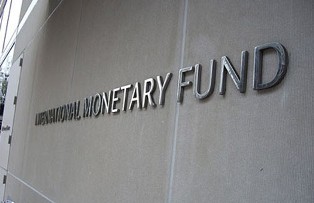
The International Monetary Fund, (IMF), a powerful financial institution founded in 1945, is supposed to deal with the problems. One of the IMF’s official aims is prevent devaluation of national currencies to gain competitive advantages. The IMF normally issues credits accompanying them with imperative terms and recommendations to the recipient countries.
Independent experts are severely critical of the IMF, as well as of other international institutions (the World Bank, World Trade Organization and so on). Specifically, they point out that the IMF’s recommendations are aimed at optimizing international financial flows in developed countries’ interests rather than at strengthening developing economies.
The criticism against the IMF is substantiated by examples of implemented “recommendations” by the IMF. Among the examples is the paradoxical – even tragic – experience of Mexico, which reduced public expenditures and carried out large-scale privatization in exchange for IMF credits. Mexican farmers were relatively deprived of government assistance and left to the mercy of fate. As a result, Mexico, which is known as a corn raiser, had to export corn (essential food for the country’s population) from other states, mainly the U.S. Quite a few examples of the IMF’s activities in developing countries can be cited.
Surprisingly, the developed countries, members of this “respectable” organization, overtly go on acting against the IMF-declared aims. For example, the U.S., at a government level, is actively supporting its farmers thereby implementing a policy running counter to IMF recommendations. China, another IMF-member, is not going to revise the yuan/USD exchange rate.
So the policy of the IMF (as well as of the World Bank, WTO and others) is the most “effective” in the developing countries, recipients of IMF credits. Armenia, as well as the other post-Soviet states, is not an exception. It was under international financial agencies’ pressure that government property was “promptly” privatized in 1990s, when the idea of “people’s capitalism” proved a complete and disastrous failure.
As a result, the government property – plants and factories, trade and public catering establishments, as well as other lucrative businesses – passed into the hands of the few “home-bred” businessmen. As a result, a powerful and influential oligarchic class was formed, and the sharply popularized population formed two opposing camps.
The distribution of collective farms’ property among Armenian farmers, without necessary prerequisites for the formation of cooperative societies and other associations, seems to have been a shady enterprise as well. The former collective farmers, who are now individual ones, are left alone in carrying the burden of growing and selling agricultural produce.
The international financial agencies could hardly been unaware of the predictable results of their “recommendations.” They have a wide experience in other countries drawn into the tangled web of their influence. Mexico is one of the examples. However, it is reasonable to suppose that the same financial agencies are banks concerned with getting their credits back – with interests.
By June 30, 2010, the IMF’s share in Armenia’s foreign debt had reached 21.2%. The leader is, however, the World Bank, its share being 38.9%. Acting in cooperation, the two powerful financial agencies have “ensured” over 60% of Armenia’s foreign debt. He who pays the piper calls the tune – as “advice” and “recommendations!
In its September report, the IMF “advised” the developing countries to focus attention on stimulating domestic demand rather than on exports! For Armenia, with its extremely unfavorable foreign trade balance, this advice means stimulating demand to promote imports. As regards the other recommendation, namely, reducing the budget deficit, it will inevitably force the Government to stop a number of programs.
At his meeting with journalists this September, IMF Resident Representative in Armenia Guillermo Tolosa voiced a different opinion, opposite to the aforementioned advice about domestic demand. According to him, Armenia will not be able to develop unless it develops export! So the only thing for us to do is to make guesses at what we should develop...
Available in
русский