make preferable
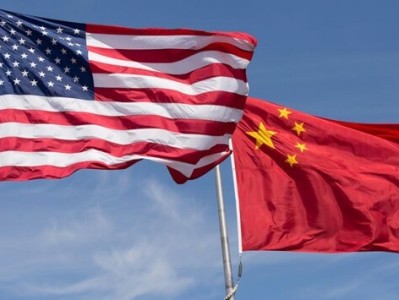
The world’s hopes for curbing climate change hinge on action by two giant nations whose relations are deteriorating: China and the United States. The two countries both say they are intent on retooling their economies to burn less climate-wrecking coal, oil and gas. But tensions between them threaten their ultimate success, AP reported.
China and the United States are the world’s No. 1 and No. 2 carbon polluters, respectively, pumping out nearly half of the fossil fuel fumes that are warming the planet’s atmosphere.
The fast cuts in carbon needed to stave off the worst of climate change are all but impossible unless these countries work together and basically trust each other’s pledges. During the Trump administration, the U.S. used China’s emissions as an excuse not to act, and in the past China pointed to U.S. historical emissions as a reason to resist action.
New details of how quickly China plans to reduce carbon emissions will be revealed Friday when Beijing releases its next Five Year Plan. And in April, President Joe Biden is expected to announce the United States’ own new targets for emissions cuts.
The U.S. and China both have appointed veteran envoys as their global climate negotiators, John Kerry and Xie Zhenhua. But while the two senior statesmen worked well together in laying groundwork for the 2015 Paris climate accord, now they face new challenges.
U.S.-China climate diplomacy threatens to be overshadowed by what the United States sees as Beijing’s menacing policies toward Hong Kong, Taiwan and the South China Sea, conflict over human rights and trade, and U.S. claims of Chinese espionage.
Meanwhile, Chinese officials are upset about restrictions imposed by the Trump administration on trade, technology, Chinese media and students in the U.S., and the State Department’s declaration this year that atrocities against China’s Muslim minorities are “genocide.”
Can climate talks between the two countries survive their other geopolitical battles?
Behind the dry numbers, massive spending on infrastructure and technology is needed to switch to a more energy-efficient economy, running on wind, solar and other cleaner-burning fuels. And Biden has a narrow majority in Congress to push his agenda, with Republicans, as well as some Democrats, opposing his plans.
Climate scientists say countries need to move fast to avert catastrophic temperature rises.
In 2019, coal accounted for 58% of China’s total primary energy consumption, according to the U.S. Energy Information Administration.
Many experts question whether the construction of coal-fired plants is driven by demand, or simply meant to stimulate the economy during a downturn. Either way, the brand-new coal plants have consequences.
The most important questions now, said Deborah Seligsohn, an expert in Chinese governance and air pollution at Villanova University, are: “How soon can China’s carbon emissions peak, and at what level?”
The key, climate negotiators say, will be making it worth China’s while — financially and in terms of its international standing — to slow down its building and funding of new coal plants and speed up spending on clean energy.