make preferable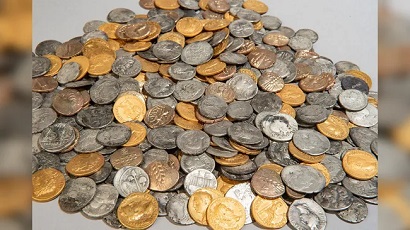
Two metal detectorists in the Netherlands have found a hoard of first-century gold and silver coins, Live Science reports.
The rare mix of Roman and British money features portraits of emperors and kings who ruled from Rome, England, and Africa.
The 404 coins were discovered in the fall of 2023 in the town of Bunnik, about 24 miles (39 kilometers) southeast of Amsterdam. The hoard was purchased by the National Museum of Antiquities of the Netherlands, which recently placed them on display in an exhibition called "The Netherlands in Roman Times," according to a translated statement published Monday.
Many of the coins were minted between A.D. 46 and 47, during the reign of the Roman emperor Claudius. During this period, the northern limit of the Roman Empire was the Rhine River, where Roman troops were set up to fend off attacks from Germanic tribes and to launch forays into Great Britain.
Of the more than 400 coins, 116 were gold. These gold coins included 72 Roman aurei dating from 19 B.C. to A.D. 47, as well as 44 gold alloy coins, called staters, that were minted in Britain.
Also in the hoard were 288 silver coins, all struck between 200 B.C. and A.D. 47. One depicts Julius Caesar, and there is also a rare example of a coin with Juba, king of Numidia (present-day Algeria), on it.
Dutch archaeologists who studied the coins and the spot of discovery think the hoard was likely buried in A.D. 47, according to the statement.
A Roman soldier returning from Britain may have collected the Roman coins as his pay and the British coins as war booty. The soldier may have planned to dig the coins up later, or perhaps he buried them as an offering of gratitude to the gods who allowed him to return safely from battle.