make preferable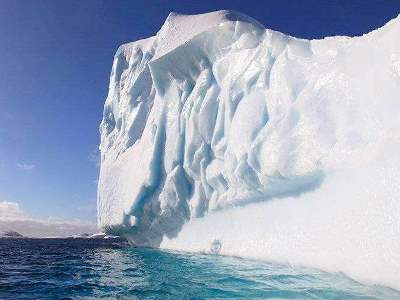
The world's biggest iceberg—more than twice the size of London—could drift towards a remote island where a scientist warns it risks disrupting feeding for baby penguins and seals, AFP reports.
The gigantic wall of ice is moving slowly from Antarctica on a potential collision course with South Georgia, a crucial wildlife breeding ground in the South Atlantic.
Satellite imagery suggested that unlike previous "megabergs" this rogue was not crumbling into smaller chunks as it plodded through the Southern Ocean, Andrew Meijers, a physical oceanographer at the British Antarctic Survey, told AFP.
He said predicting its exact course was difficult but prevailing currents suggested the colossus would reach the shallow continental shelf around South Georgia in two to four weeks.
But what might happen next is anyone's guess, he said.
It could avoid the shelf and get carried into open water beyond South Georgia, a British overseas territory some 1,400 kilometers (870 miles) east of the Falkland Islands. Or it could strike the sloping bottom and get stuck for months or break up into pieces.
Meijers said this scenario could seriously impede seals and penguins trying to feed and raise their young on the island.
The island is home to 1.3 million pairs of Antarctic penguins—one of the largest communities in the world—about 5 million seals, and 65 million nesting birds.
Roughly 3,500 square kilometers (1,350 square miles) across, the world's biggest and oldest iceberg, known as A23a, calved from the Antarctic shelf in 1986
In 2023, the British Antarctic Survey released satellite images showing the movement of icebergs.