make preferable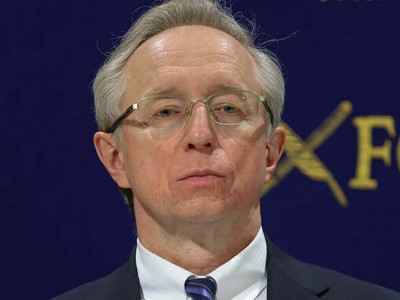
As for the specific rapprochement of Armenia with the European Union (EU), we have clearly stated both publicly and during the dialogue with our Armenian friends that simultaneous membership in the Eurasian Economic Union (EAEU) and the European Union is impossible, since they are two incompatible regulatory systems with different approaches to customs standards, technical, sanitary and phytosanitary standards, marking of goods—and even labeling of goods. This was stated by Russian deputy foreign minister Mikhail Galuzin in an interview with Izvestia.
According to Galuzin, the aforesaid are two completely different systems, and therefore being in them simultaneously is simply impossible.
“As for the issue of starting negotiations between Armenia and the European Union in favor of various rapprochement projects, and in particular, a visa-free regime, yes, such negotiations have begun. We see that the European Union is also loyal to itself here, since without making any promises or making any serious decisions in terms of visa-free relations, it already demands from Armenia political loyalty and adherence to anti-Russian sanctions. And all this is happening amid the fact that Armenia’s membership in the Eurasian Economic Union brings tangible and significant long-term benefits in the form of increased trade with the EAEU and increased investments from the EAEU to Armenia.
If we take the latest figures from Armenian statistics, I will present them approximately so as not to be mistaken in some details, then the amount of trade between Armenia and its [other] EAEU partners is about $13 billion, and last year it increased by 53%, while the [country’s] amount of trade with the European Union last year barely exceeded $2 billion and decreased by 24%. That is, even from these figures of Armenian statistics it becomes clear where the sources of the current economic well-being of Armenia and its people lie. A sharp change of paradigm and the transition to the European Union platform, in our opinion, will inevitably be associated with a decline in GDP and serious blows to Armenian business, the economy, and the living standards of ordinary citizens of Armenia.
Armenian politicians sometimes say that there is a mood in Armenian society in favor of joining the EU. Such moods probably exist, but, as we believe, the moods of those citizens of Armenia who think about the future of their country in the Eurasian family and within the framework of Eurasian integration are equally worthy of attention,” said the Russian deputy FM.