make preferable
By Aram Gabrielyan
What it started with?
On June 12, 2018, when introducing the newly appointed head of the SIS, Sasun Khachatryan, to the staff of the Special Investigation Service, Pashinyan announced: “One of the most important tasks that the SIS must carry out is the disclosure of March 1.”
A month and a half later, on July 26, the second president of the Republic of Armenia, Robert Kocharyan, who was abroad, was summoned to the SIS as a witness, but on the same day he was already charged under Article 300.1 of the Criminal Code, and the SIS petitioned the court to detain him. In essence, President Kocharyan was accused of declaring a state of emergency in the country on March 1, 2008.
The lawyers were puzzled, since the article under which the charges were brought did not exist in the new constitution. This puzzlement became one of the most high-profile legal disputes in Armenia’s modern history. The issue concerned Article 300.1 of the Criminal Code of the Republic of Armenia, under which the second president was charged with “overthrowing the constitutional order” in the context of the events of March 1, 2008. The lawyers argued that the article did not exist. At the time of the events of 2008, the Criminal Code was in force in the 2003 edition, where Article 300.1 entitled “overthrowing the constitutional order” did not exist at all. That article was added to the code later, in 2009, therefore, an indictment could not be brought under the article, which was supposedly committed earlier.
The First Arrest and the Immunity Dispute
On July 27, the Yerevan Court of General Jurisdiction, presided over by Vache Margaryan, placed Kocharyan under arrest. This was the first arrest of the president in this case.
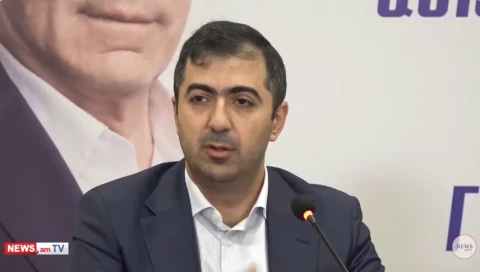
The defense lawyers noted that there was no reasonable suspicion, no risk of escape, no justification for obstructing the investigation. A day after President Kocharyan’s arrest, the lawyers of the Second President and the head of hisoffice, Viktor Soghomonyan, held a press conference. The latter said: “Both the accusations brought against Robert Kocharyan and his arrest are absolutely illegal. This is a clear political and personal persecution. And this is what has recently become fashionable to call a ‘vendetta.’ The attitude of the SIS - to involve Kocharyan as a witness, then quickly charge him, then quickly detain him - it seems to me that these phenomena are telling, they do not even need comments.” Viktor Soghomonyan also noted: "This case has nothing to do with the disclosure of the case of the 10 casualties of March 1. A clear goal has been set with false accusations: simply to achieve Kocharyan's arrest. Are you thinking, are they now solving March 1? Absolutely, direct persecution is being carried out."
On August 13, the Court of Appeal, presided over by Aleksandr Azaryan, commuted Robert Kocharyan’s pretrial detention. According to the judge’s decision: “The courts have no jurisdiction and cannot discuss the issue of detaining a president, including a retired one, for acts arising from his status, unless he is deprived of immunity in compliance with the established procedures.”
According to the court’s logic, the actions attributed to Kocharyan could have arisen from his status as President of the Republic and the exercise of the powers of the President. And the process of depriving him of immunity through a special procedure for bringing him to criminal liability was not carried out. Robert Kocharyan was released, but the charges were maintained.
The authorities' reaction was quite harsh (later, Judge Aleksandr Azaryan presented this episode as an example of pressure on the judiciary). The head of the Special Investigation Service, Sasun Khachatryan, publicly stated that the decision of the Court of Appeals to release Robert Kocharyan was illegal, and expressed hope that the Prosecutor General's Office would file a cassation appeal against it. Judge Azaryan stated that the head of the SIS made such an assessment without having yet read the full text of the judicial act. The judge considered this an inadmissible interference in the activities of the court.
Later, in 2020, disciplinary proceedings were initiated against Aleksandr Azaryan, which was reported by the same Sasun Khachatryan. The reason was Azaryan’s remarks regarding the head of the SIS Sasun Khachatryan during another closed-door court session: “I hoped that you would not descend to the level of the head of the SIS and would not criticize the judicial act that has entered into legal force.” Azaryan had reacted to the accusation by saying, “he called it as it is.” On July 9, 2020, the Supreme Judicial Council rejected the motion to subject Judge Azaryan to disciplinary action.
Aleksandr Azaryan, let us recall, was the judge with the highest rating in the judicial evaluation system for years.
Wiretaps and second arrest
On September 11, 2018, a wiretap of a phone conversation between NSS Director Artur Vanetsyan and SIS Chief Sasun Khachatryan was made public. The conversation took place on the very day Kocharyan was indicted.
Vanetsyan said that the judge examining Kocharyan’s detention had called him and said that he was afraid to make a decision to detain him. Vanetsyan says that he told the judge, “Whether you want it or not, you have to detain him.”
This was followed by another scandalous Pashinyan-Vanetsyan wiretap, which was made public on December 5, 2018. During the conversation, Pashinyan was participating in the EAEU session and spoke in a whisper. In the conversation, Pashinyan asks: “And what’s up regarding Kocharyan? Is there anything new?” to which Vanetsyan replies that the court hearing on Kocharyan’s case is continuing. In another part of the conversation, Pashinyan again asks what happened with Kocharyan's arrest, to which Vanetsyan replies that "it will be soon."
The decision to release Robert Kocharyan from detention did not remain final. On November 15, 2018, the Court of Cassation overturned Judge Azaryan’s August 13 decision and sent the case for a new trial. On December 7, 2018, the Criminal Court of Appeal, presided over by Rubik Mkhitaryan, upheld the first instance court’s July 27, 2018 detention decision. The Court of Appeal found that President Kocharyan had connections, influence, and authority that, if released, could give him the opportunity to influence the individuals involved in the case. Let us recall that this was the decision that was discussed during wiretapping by the heads of the National Security Service, the SIS, and Prime Minister Pashinyan. It is noteworthy that Judge Rubik Mkhitaryan, who issued a second arrest warrant for Robert Kocharyan, was promoted and in 2024, by decree of the President of the Republic of Armenia, was appointed a judge of the judicial panel investigating corruption crimes of the Anti-Corruption Chamber of the Court of Cassation.
It is worth mentioning that the prosecutors defending Robert Kocharyan’s charges also had official promotions. Prosecutor Gevorg Baghdasaryan, for example, was appointed Deputy Prosecutor General. But three years later, when the case was already recognized as unconstitutional, he was expelled from the system. Prosecutor Karen Bisharyan was appointed an appellate judge. Another prosecutor, Petros Petrosyan, was also promoted, who was also expelled from the system and now works as a lawyer.
And so, on December 7, 2018, Robert Kocharyan was arrested for the second time.
The 2019 release, the court blockade, and the third detention
President Kocharyan’s next release from custody was on May 18, 2019. The Avan and Nor Nork Administrative District Court of Yerevan, presided over by Judge Davit Grigoryan, decided to release the second President of the Republic of Armenia, Robert Kocharyan, on personal guarantee.
On May 14, the former and then-serving Presidents of the NKR, Arkadi Ghukasyan and Bako Sahakyan, submitted a letter of guarantee to the court to release Robert Kocharyan from custody. Judge Davit Grigoryan had stated that the guarantors must appear in court to submit the guarantee. The presidents appeared in court and confirmed their letter of guarantee. Judge Davit Grigoryan not only released Robert Kocharyan, but also suspended the proceedings in the case by a separate decision of May 20 and appealed to the Constitutional Court, requesting it to decide on whether Section 1 of Article 300.1 of the Criminal Code of the Republic of Armenia, which was presented against Kocharyan, complied with the Constitution.
These decisions by Davit Grigoryan cost not only him, but also the judicial system dearly.
On the same day, May 19, 2019, Nikol Pashinyan made a Facebook live broadcast calling for the blocking of all entrances to the courts of Armenia from 8:30 a.m. on May 20. This was done, organized by his teammates, albeit by a small but aggressive group of people. There are videos on the Internet of how Judge Davit Balayan, who has always enjoyed high prestige in the judicial system, was pushed and shoved, as he tried to enter the courthouse through the window under the blockade to perform his duties.
On July 26, 2019, the Acting Prosecutor General submitted a petition to the Supreme Judicial Council to obtain consent to initiate criminal prosecution against Davit Grigoryan. At that time, the Prosecutor General of the Republic of Armenia Artur Davtyan, who personally represented the cases related to Kocharyan, was on vacation; Armen Khachaturyan was replacing him on those days, and he submitted the corresponding petition to the Supreme Judicial Council. Grigoryan was charged with suspicion of committing official fraud under Section 1 of Article 314 of the Criminal Code. It allegedly related to a completely different court case, but it was clear that the motive was to release Robert Kocharyan. On July 27, 2019, the Supreme Judicial Council’s decision was published, and as a result, Judge Grigoryan's powers were suspended by force of law. After years of hearings, Davit Grigoryan was acquitted, and the state was obliged to reinstate him to work, as well as pay compensation.
On June 5, 2019, during a question-and-answer session with journalists, Nikol Pashinyan stated: “Is there a judge in Armenia today who can’t do what the Prime Minister says?”
20 days after Pashinyan’s statement, on June 25, the Criminal Court of Appeal, presided over by Armen Danielyan, overturned the May 18 decision of first instance court judge Davit Grigoryan, by which Kocharyan’s pretrial detention was commuted with the personal guarantee of Bako Sahakyan and Arkadi Ghukasyan, abolished that personal guarantee, and again chose detention as a pretrial measure for Kocharyan. According to Judge Danielyan’s decision, the main risk was that if Kocharyan were at liberty, he could exert illegal influence on the persons involved in the case and thereby obstruct the administration of justice.
During the hearing, Judge Armen Danielyan did not even allow the defense to express its position and made a decision, listening only to the prosecution. On June 25, 2019, Robert Kocharyan was detained for the third time, this time by a judge who always had the most negative rating in the judicial system. Also, Armen Danielyan overturned Judge Grigoryan’s May 20 decision to apply to the Constitutional Court and suspend the proceedings of the case, sending the case for a new examination.
Armen Danielyan also had a job promotion in the near future, and is now a judge of the Criminal Chamber of the Court of Cassation.
And so, after the suspension of Davit Grigoryan’s powers, Robert Kocharyan’s case was reassigned to Judge Anna Danibekyan on August 19, 2019, and on August 20, she accepted the case for proceedings.
The case in the Constitutional Court, and developments surrounding the Constitutional Court
Although Judge Danielyan overturned Judge Grigoryan's May 20 decision to apply to the Constitutional Court and suspend the proceedings, the Constitutional Court decided on July 8, 2019, to partially accept Grigoryan's application for examination, specifically on the issue of the constitutionality of Section 1 of Article 300.1.
This was the decision that, according to many lawyers, began the process of government attacks and demolition of the Constitutional Court. The authorities, apparently, did not forgive the high court for the decision to accept the case against Robert Kocharyan for consideration. The process of changing the members of the Constitutional Court and its president began. On February 6, 2020, the National Assembly decided to put an amendment to one article of the Constitution to a referendum, which would allow the dismissal of most of the judges. It was planned that the powers of the members of the Constitutional Court who had been in office for many years and were appointed under the old procedure would cease. Pashinyan announced in the National Assembly that day that the referendum should resolve the “issue” of the Constitutional Court. The referendum was scheduled for April 5, 2020. However, the situation changed due to the Covid-19 pandemic. After several campaign rallies, Pashinyan finally gave in, and on March 16, a state of emergency was declared in Armenia. Since holding a referendum during a state of emergency was prohibited, the April 5 referendum did not take place. On March 17, the Central Electoral Commission announced the suspension of the referendum process. The referendum was eventually canceled on June 25, and three days before that, on June 22, 2020, the National Assembly passed the amendment to the Constitution through parliament, which changed Article 213. Under the new regulation, the powers of a member of the Constitutional Court appointed before the entry into force of Chapter 7 of the Constitution and who had served for at least 12 years in total were considered terminated. On June 26, this amendment terminated the tenure of three Constitutional Court judges: Hrant Nazaryan, Feliks Tokhyan, and Alvina Gyulumyan. At the same time, Hrayr Tovmasyan’s tenure as President of the Constitutional Court was terminated. It should be noted that during that time, the authorities repeatedly offered a deal to the members of the Constitutional Court: to resign and receive a high pension. However, it was rejected.
The parliamentary opposition also played a role in this process. The Prosperous Armenia Party (PAP) and the Bright Armenia Party (BAP), questioning the constitutionality of these amendments, boycotted the June 22 vote. The PAP tried to challenge the amendments ay the Constitutional Court, but only 26 of the required 27 signatures were collected, while the BAP refused to join at that time, declaring that it would appeal to the Constitutional Court after the end of the investigation into Robert Kocharyan’s case, effectively rendering a service to the authorities. As a result, by the time the amendments came into force, the opposition’s application did not have the required number of signatures, and the termination of the powers of the three judges and Hrayr Tovmasyan’s term as the President of the Constitutional Court had already become a fact. In August, the BAP and the PAP had already appealed to the Constitutional Court together, but by that time the amendments had entered into force, and the termination of their terms had already taken place.
Thus, the referendum issue was actually resolved not by a referendum, but by the passing of an amendment to the Constitution by the National Assembly, which, according to many lawyers, was also illegal. Subsequently, only persons loyal to the ruling Civil Contract Party (CCP) and Pashinyan and desirable to them were appointed as judges of the Constitutional Court, regardless of the fact that some of them were not judges.
On September 17, 2019, the court, presided over by Anna Danibekyan, rejected another petition to release Kocharyan from detention, and the president continued to remain in detention. In October-December of the same year, due to health problems, the second president was hospitalized several times, including due to the need for surgery, but was later returned to prison.
Release from custody after a year
One year after his arrest in June 2019, on June 18, 2020, the second president of the Republic of Armenia was released from custody, this time by the decision of Judge Arsen Nikoghosyan of the Criminal Court of Appeal. The bail amount was set at 2 billion drams. According to the court’s reasoning, there was a certain risk of hindering the investigation of the case while Kocharyan was free, but the court found that a bail of 2 billion drams could reduce that risk. According to the explanation of Robert Kocharyan’s son, Levon Kocharyan, about 500 million drams of the bail was collected through family funds, including by mortgaging his and his sister Gayane’s apartments, and about 1.5 billion drams were provided by benefactors.
The Prosecutor General’s Office appealed this court’s decision. On July 30, 2021, the Court of Cassation rejected the prosecutor’s appeal.
After Judge Arsen Nikoghosyan’s decision to release Robert Kocharyan from detention, some people shared his personal phone number and residential address on the Internet, with calls for violence. Although the authorities themselves did not publicly criticize the judge’s decision, the online attacks gave the impression of a government order. That decision suspended Judge Nikoghosyan’s further career advancement, in contrast to the judges who made the detention decisions, who were being promoted.
Article 300.1 is declared unconstitutional
However, despite the fact that the composition of the Constitutional Court had undergone serious changes and judges favored by the authorities had been appointed, on March 26, 2021, the Constitutional Court decided to recognize Article 300.1 of the Criminal Code as contradicting Articles 78 and 79 of the Constitution and invalid.
This was a key legal turning point for Robert Kocharyan’s case, because the main charge against him was based on Article 300.1.
The accusation collapsed.
After the publication of the Constitutional Court decision, Robert Kocharyan’s lawyer Aram Vardevanyan announced outside the courthouse that the Constitutional Court had in fact confirmed what the defense and Robert Kocharyan had been claiming from the very beginning of the case: that Article 300.1 did not meet the requirements of legal certainty. “I regret that it all took three years… In the end, the truth prevailed,” Vardevanyan said, emphasizing that after the Constitutional Court decision, criminal prosecution under that article was no longer subject to termination.
Indeed, from the very first day of the accusation against Robert Kocharyan, President Kocharyan himself and his legal team have repeatedly stated that it was unfounded and unconstitutional. However, this was officially recorded about three years later, after the second President of the Republic of Armenia was held in illegal detention for 540 days, with three interruptions.
Following the Constitutional Court decision of March 26, 2021, the Yerevan Court of First Instance on April 6 terminated the criminal prosecution under Article 300.1 against Robert Kocharyan, Seyran Ohanyan, and Yuri Khachaturov.
Return of the case and new charge
The prosecutor's office appealed that decision. And three and a half years later, on September 12, 2024, the Anti-Corruption Chamber of the Court of Cassation overturned the April 6, 2021 decision and sent the case to the Anti-Corruption Court for a new examination.
On October 11, 2024, the prosecutor's office adopted decisions to change the legal assessment of the charge filed under the former Article 300.1 and to file a new charge against Kocharyan and others under Section 3 of Article 309 of the 2003 Criminal Code. That article concerns the abuse of power or official authority by an official.
The first session of the new phase of the Anti-Corruption Court took place on November 28, 2024, presided over by Judge Sargis Petrosyan. At that session, the prosecutor moved to file new charges against Kocharyan and the others. The main legal logic of the prosecutor's office was as follows: in 2021, the Constitutional Court recognized Article 300.1 as unconstitutional and invalid, but this did not in itself mean that the described acts could not receive a different criminal assessment.
Kocharyan and his defense attorneys argued from the very beginning that if Article 300.1 was declared unconstitutional and the previous prosecution was terminated on its basis, then how is it possible to bring new charges within the same case?
At the same court hearing, President Kocharyan responded with surprise: “There is no accusation without an article, there is no accused without an accusation.” He questioned his status as an accused.
For months, the defense challenged the legitimacy of the new charges. The court confirmed the charges only on January 16, 2026, after one year and two months of court hearings.
Kocharyan's counterarguments
Robert Kocharyan has repeatedly called the accusation absurd and disputed the logic of the accusation that the decree on the state of emergency was illegal. His main point was that even if there is a legal problem, the decree on the state of emergency was approved by the National Assembly, and under the transitional provisions of the Constitution in force at that time, the president had the authority to declare a state of emergency in such conditions.
“This indictment is a political document, it was not written by lawyers, it was written in political rooms, there are absurdities,” said Robert Kocharyan.
He singled out the two alleged “motives” mentioned in the indictment: the goal of “preserving the desired power system” and “transferring power to his close associate Serzh Sargsyan at all costs.” Kocharyan was asking what “the desired power system” meant, and noted that he had not even received an explanation of this wording from the investigator.
In his speech on September 8, Kocharyan specifically addressed the wording of “transferring” power to Serzh Sargsyan. His argument was as follows: the president does not simply “transfer” power to the next president. According to Kocharyan, presidential elections are conducted by the Central Electoral Commission, the assumption of power by the elected president occurs according to the procedure prescribed by the Constitution, the new president is sworn in in the National Assembly, and one of the duties of the incumbent president is to ensure that power is transferred to the legally elected person.
This is why President Kocharyan was asking this very question: if the election of Serzh Sargsyan is not presented in the indictment as illegal or fraudulent, then how can the transfer of power by the incumbent president to the elected president be presented as a criminal objective? In the same speech, Robert Kocharyan also said the following: “For 7 years, I have not known what the law enforcement system, the RA government, wants from me.”
During the court hearing on July 11, 2025, Kocharyan said that it seems that those who drafted the indictment were not familiar with the Constitution of that time at all, or did not understand what was written.
Other assessments and counterarguments of Robert Kocharyan regarding the “March 1” case are as follows:
1. I immediately had the impression, later substantiated, that this investigative group does not aim to solve this case, but rather that there is a designated culprit, and they must do everything to prove that guilt.
2. The encroachment on the constitutional order was committed by Levon Ter-Petrosyan's supporters, who were declaring that they should dismantle the state system. What constitutional order have we overthrown? Only a person with a sick imagination can assume that this is possible.
3. Several dozen cars had already been set on fire, barricades had been built, internal troops were being directly attacked, this was the situation. Should I have calmly watched how the state system was being disintegrated? Not declaring a state of emergency today would be considered inaction on the part of the president.
4. On March 1, protesters fired machine guns at police lines, there are numerous videos of this. The first casualty was a police officer. No opposition figure was injured.
Fourth arrest: 2026
The fourth arrest of the second president of the Republic of Armenia took place in 2026. He is essentially accused of ratifying a decision submitted by the government during his presidency.
On August 24, a sharp question-and-answer session between Nikol Pashinyan and Levon Kocharyan took place in the National Assembly, during which Levon Kocharyan blamed Pashinyan for the loss of Artsakh and thousands of casualties, noting that more than 500,000 people who voted for the opposition call Pashinyan a “filthy traitor.”
After this phrasing, Pashinyan’s nerves gave way and he announced from the NA podium that the Kocharyans “shall sit [in prison] and be dispossessed.”
The very next day after thids announcement, on August 25, at 7 am, the Anti-Corruption Department, together with the NSS special forces, began operations against the Kocharyan family.
Searches were carried out in the homes of Robert and Levon Kocharyan, as well as in companies owned or affiliated with them, in particular, Toyota Yerevan, Pregomesh, Orange Fitness, and Play City, but nothing containing a criminal element was made public.
On the same day, Robert Kocharyan and his eldest son, Sedrak Kocharyan, were arrested and transferred to the Anti-Corruption Committee.
In the Anti-Corruption Committee, President Kocharyan’s fell ill, and he was transferred to a medical center. It turned out that the second president of the Republic of Armenia had undergone heart surgery about 1-2 weeks before these events and, according to the doctor’s instructions, he should be in a calm state for about a month.
However, this circumstance did not prevent the law enforcement: on August 26, he was taken to the Anti-Corruption Court, where the motion to detain him was being considered.
It is noteworthy that during the examination of the detention issue, Kocharyan was again transferred to the hospital, and the court continued the session without his participation and at dawn on August 27, presided over by Judge Sargis Dadoyan, imposed a two-month pretrial detention on the grounds of not obstructing the investigation.
It is important to note here that during all previous arrests and the periods between them, Robert Kocharyan's behavior in terms of obstructing the investigation or hiding did not give rise to any complaints, and the defense has always emphasized his proper behavior.
According to the lawyers, Robert Kocharyan is accused of fulfilling his constitutional duties.
"The necessary basis for the arrest of Kocharyan, reasonable suspicion, does not exist. The defense presented its position, claiming that reasonable suspicion does not exist, and the accusation has numerous legal and factual problems. The accusation refers to the fact that Robert Kocharyan, being president, fulfilled his constitutional duty—ratified government decisions," Aram Orbelyan noted, then added, "How can Robert Kocharyan hinder, his only action is to ratify the government decision; that is, he should have gone to the government archive and deleted it?"
In light of all this, it is difficult to view Kocharyan's arrest as just another criminal proceeding. There are three main theories circulating regarding the case:
Why are they "catching" Kocharyan?
1. Domestic political case against the backdrop of new concessions. Kocharyan’s arrest took place at a time when the opposition was actively discussing possible new concessions by the government to Azerbaijan and the expected decisions on border and territorial issues.
In these circumstances, the isolation of a political figure like Kocharyan is presented as a political calculation: to remove those people who can organize resistance or unite a disgruntled society.
2. Geopolitical case. Kocharyan’s teammates view his latest arrest not only in the context of domestic politics, but also in the context of geopolitical processes taking place around Armenia. In their assessment, in the context of the change in Armenia’s foreign policy vector, the deterioration of Armenian-Russian relations, and new demands coming from Baku, the Armenian authorities are trying to isolate those political forces and figures who can resist that agenda. Bagrat Mikoyan, head of Robert Kocharyan’s office, directly called the fourth arrest “exclusively geopolitical” and linked it to the demands coming from Baku.
3. Aliyev’s demand: The decision to arrest Kocharyan was made on August 26, the day after the birthday of the First Lady of Azerbaijan Mehriban Aliyeva. Taking into account the circumstances of the imprisonment of the presidents of Artsakh in Baku, Aliyev’s consideration of the participants of the Artsakh war as terrorists, as well as the experience of previous years, according to which Pashinyan fulfills Aliyev’s demands, this arrest is also connected with the demand of Azerbaijan.
The entire sequence of events that took place from 2018 to 2026 shows one thing: Kocharyan’s case in Armenia has long been not just a criminal case of one person. It has become a symbol of the authorities of post-revolutionary Armenia: falsifications, demolitions, extraditions, corruption, deceiving the public, and division. Although these criminal cases have no prospects, as the example of the case recognized as unconstitutional has shown, they also collapse a number of myths built about President Kocharyan.