make preferable
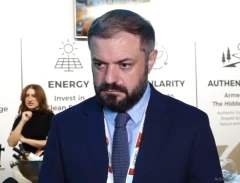
Below is an interview by RA Minister of Transport and Communication Gurgen Sargsyan to NEWS.am
Question: Mr. Sargsyan, at what stage is the construction of the Iran-Armenian railway?
Answer: The program was negotiated with the Asian Development Bank (ADB) yesterday. We signed a grant memorandum with the bank. The ADB will allocate almost US $1mln, which will allow us to conduct a feasibility study of the project and, later, carry out the project work. An Austrian company conducted a preliminary study, and we will use results in the work.
Question: When do you start the construction?
Answer: The work is likely to be started immediately after the project work is completed. I am speaking of a number of components. Considering the study results, we must first of all specify the railway program. After considering the approaches, we will set the parameters, namely, the class, speed and traffic capacity. We must know what type of railway we need, and what will be the cost. Thus we will have a clearer idea of the work. The issue of financing follows then. I would like to tell you that we are conducting negotiations, reaching preliminary agreements, which will enable us to carry out construction in the future. To implement the construction project, we, under the Government's decision, have established a closed corporation, Railway Construction Directorate CJSC, to deal with the organization. We have launched a large-scale laborious program and are making the first steps. When the foundations are properly laid, the work shows progress.
Question: So do we have an idea of the railway we want to have?
Answer: Our only wish now is to have a rail access to Armenia's southern regions, to the Armenian-Iranian border. To attain this goal, we need expert advice and analyses. That means that project is of political importance. President Serzh Sargsyan stated that the construction of a North-South railway is one of the priorities of Armenia's economic development. Considering the task, we have to conduct necessary studies. The railway can run through Jermuk, Yghegnadzor or Ararat. We have various options. We will study all of them to take the most favorable one, in terms of not only funds, but also further influence in infrastructures. It is rather long-term and laborious work, but we must start.
Question: Will the railway be an independent enterprise?
Answer: I do not think this issue should be put on the agenda. We signed a concession agreement to accomplish specific tasks of railway development. If, in time, we have a railway meeting the present-day economic requirements, the Government will make a decision on its “form and content.”
Question: What was the effect global crisis had on inland and foreign cargo transportation?
Answer: We have registered a decline in cargo transportation, just as in all the economic sectors. I should note, however, that we have registered a considerable increase in inland rail transportation — almost 30%. That is the crisis has had diverse effects. We have sectors that showed some positive trends. We have quite vigorous activities in road construction amid the crisis. Quite a number of serious financial institutions plan new projects in Armenia — not only long-term, but also short-term ones, which is an incentive. Specifically, we started negotiations with the World Bank (WB) for funding road construction projects. We successfully completed the negotiations, approved the results, invited tenders for a contract, and the construction is in progress now. We plan to construct about 188 kilometers of rural roads this year alone. I would like to note that the construction of roads of the same length was budgeted as well. This is only one of the WB programs. The WB made a high appraisal of the program we submitted and decided to allocate an additional tranche for rural road construction. The negotiations were completed and the WB Board of Directors made a favorable decision. Some of the funds will be provided this September for the work to be completed by the end of this year.
Question: Now and then the press reports on problems Georgia creates for the transportation of Armenian cargoes. What is the state of cargo transportation in Georgia? Have the customs tariffs been raised for Armenia?
Answer: No tariff has been raised for Armenia. Some very slight fluctuations caused by fluctuations of the Swiss franc are regular on the railroad, which is the case throughout the world. The railroad system links its tariffs with the Swiss franc. On the contrary, Georgia has granted customs privileges to Armenia as a country without an outlet to sea.
Question: Armenia mainly transports its cargoes by means of the Caucasus-Poti (Russia-Georgia) and Ukrferry (Georgia-Ukraine) ferry services. Is Armenia looking for alternative ways not to be dependent on those companies?
Answer: Our country has four neighbors, with no rail communication with two of them. At present we transport all our cargoes through Georgia. Also, Georgia has no transport communication with Russia for political reasons. In any case, the ferry service is our only way. However, we have processes involving the Armenian-Turkish border. I do not rule out the re-opening of this way under favorable circumstances.
Question: What is the expected economic effect of the reopening of the Armenian-Turkish border?
Answer: I cannot cite specific figures for you. But we have some calculations. Specifically, all the cargoes transported through the Mediterranean across the Black Sea double their cost. Crossing the Black Sea is “an expensive treat” for ships. We could transport cargoes by railway through Turkey, which would be much cheaper. Our economic gains are, of course, obvious. Besides, the construction of the Turkey-Bulgaria tunnel, which is to run along the bottom of the Bosporus, is to be completed in 2010 or 2011. Cargo transportation by land will be started afterwards, which will enable us to transport cargoes to any European country. Moreover, our rail program will enable us to transport cargoes from Asia to Turkey and Europe.
Question: Does Turkey take any interest in Armenia? At present that country has no communication problems, pursuing political rather than economic interests.
Answer: All the processes cannot be purely political, moral or historical. A political component plays an all-important role in all of them.
Question: As regards the Orange Company, various problems are reportedly being created for it. What do you think, when will the company start rendering services?
Answer: We are closely cooperating with the company at the initial stage of its market development activities. All the economic entities encounter problems. Numerous problems were resolved. By its own preliminary estimates, the company is to start rendering services this November. At present the company is preparing for installing aerials, negotiating for the purchase of territories, coverage area, etc.. Orange is expected to cover Armenia's entire territory, which means that it will start operating a year after being licensed.
Question: Will the Orange Company's activities cause a price reduction?
Answer: Price formation is an economic category influenced by a number of factors. The three mobile operators recently signed a document on biannual reduction of prices for interoperable services. The present price is 29 AMD per minute and is to be reduced in time down to 11 AMD. It means the prices will regularly be reduced. We witnessed a reduction in mobile communication prices after VivaCell entered Armenia's mobile market. Competition and development will show whether prices will be falling due to economic factors or not.
Gurgen Sargsyan: Armenia sure to gain from reopening of Armenian-Turkish border
Processes cannot be purely political, moral or historical…
Question: Mr. Sargsyan, at what stage is the construction of the Iran-Armenian railway?
Answer: The program was negotiated with the Asian Development Bank (ADB) yesterday. We signed a grant memorandum with the bank. The ADB will allocate almost US $1mln, which will allow us to conduct a feasibility study of the project and, later, carry out the project work. An Austrian company conducted a preliminary study, and we will use results in the work.
Question: When do you start the construction?
Answer: The work is likely to be started immediately after the project work is completed. I am speaking of a number of components. Considering the study results, we must first of all specify the railway program. After considering the approaches, we will set the parameters, namely, the class, speed and traffic capacity. We must know what type of railway we need, and what will be the cost. Thus we will have a clearer idea of the work. The issue of financing follows then. I would like to tell you that we are conducting negotiations, reaching preliminary agreements, which will enable us to carry out construction in the future. To implement the construction project, we, under the Government's decision, have established a closed corporation, Railway Construction Directorate CJSC, to deal with the organization. We have launched a large-scale laborious program and are making the first steps. When the foundations are properly laid, the work shows progress.
Question: So do we have an idea of the railway we want to have?
Answer: Our only wish now is to have a rail access to Armenia's southern regions, to the Armenian-Iranian border. To attain this goal, we need expert advice and analyses. That means that project is of political importance. President Serzh Sargsyan stated that the construction of a North-South railway is one of the priorities of Armenia's economic development. Considering the task, we have to conduct necessary studies. The railway can run through Jermuk, Yghegnadzor or Ararat. We have various options. We will study all of them to take the most favorable one, in terms of not only funds, but also further influence in infrastructures. It is rather long-term and laborious work, but we must start.
Question: Will the railway be an independent enterprise?
Answer: I do not think this issue should be put on the agenda. We signed a concession agreement to accomplish specific tasks of railway development. If, in time, we have a railway meeting the present-day economic requirements, the Government will make a decision on its “form and content.”
Question: What was the effect global crisis had on inland and foreign cargo transportation?
Answer: We have registered a decline in cargo transportation, just as in all the economic sectors. I should note, however, that we have registered a considerable increase in inland rail transportation — almost 30%. That is the crisis has had diverse effects. We have sectors that showed some positive trends. We have quite vigorous activities in road construction amid the crisis. Quite a number of serious financial institutions plan new projects in Armenia — not only long-term, but also short-term ones, which is an incentive. Specifically, we started negotiations with the World Bank (WB) for funding road construction projects. We successfully completed the negotiations, approved the results, invited tenders for a contract, and the construction is in progress now. We plan to construct about 188 kilometers of rural roads this year alone. I would like to note that the construction of roads of the same length was budgeted as well. This is only one of the WB programs. The WB made a high appraisal of the program we submitted and decided to allocate an additional tranche for rural road construction. The negotiations were completed and the WB Board of Directors made a favorable decision. Some of the funds will be provided this September for the work to be completed by the end of this year.
Question: Now and then the press reports on problems Georgia creates for the transportation of Armenian cargoes. What is the state of cargo transportation in Georgia? Have the customs tariffs been raised for Armenia?
Answer: No tariff has been raised for Armenia. Some very slight fluctuations caused by fluctuations of the Swiss franc are regular on the railroad, which is the case throughout the world. The railroad system links its tariffs with the Swiss franc. On the contrary, Georgia has granted customs privileges to Armenia as a country without an outlet to sea.
Question: Armenia mainly transports its cargoes by means of the Caucasus-Poti (Russia-Georgia) and Ukrferry (Georgia-Ukraine) ferry services. Is Armenia looking for alternative ways not to be dependent on those companies?
Answer: Our country has four neighbors, with no rail communication with two of them. At present we transport all our cargoes through Georgia. Also, Georgia has no transport communication with Russia for political reasons. In any case, the ferry service is our only way. However, we have processes involving the Armenian-Turkish border. I do not rule out the re-opening of this way under favorable circumstances.
Question: What is the expected economic effect of the reopening of the Armenian-Turkish border?
Answer: I cannot cite specific figures for you. But we have some calculations. Specifically, all the cargoes transported through the Mediterranean across the Black Sea double their cost. Crossing the Black Sea is “an expensive treat” for ships. We could transport cargoes by railway through Turkey, which would be much cheaper. Our economic gains are, of course, obvious. Besides, the construction of the Turkey-Bulgaria tunnel, which is to run along the bottom of the Bosporus, is to be completed in 2010 or 2011. Cargo transportation by land will be started afterwards, which will enable us to transport cargoes to any European country. Moreover, our rail program will enable us to transport cargoes from Asia to Turkey and Europe.
Question: Does Turkey take any interest in Armenia? At present that country has no communication problems, pursuing political rather than economic interests.
Answer: All the processes cannot be purely political, moral or historical. A political component plays an all-important role in all of them.
Question: As regards the Orange Company, various problems are reportedly being created for it. What do you think, when will the company start rendering services?
Answer: We are closely cooperating with the company at the initial stage of its market development activities. All the economic entities encounter problems. Numerous problems were resolved. By its own preliminary estimates, the company is to start rendering services this November. At present the company is preparing for installing aerials, negotiating for the purchase of territories, coverage area, etc.. Orange is expected to cover Armenia's entire territory, which means that it will start operating a year after being licensed.
Question: Will the Orange Company's activities cause a price reduction?
Answer: Price formation is an economic category influenced by a number of factors. The three mobile operators recently signed a document on biannual reduction of prices for interoperable services. The present price is 29 AMD per minute and is to be reduced in time down to 11 AMD. It means the prices will regularly be reduced. We witnessed a reduction in mobile communication prices after VivaCell entered Armenia's mobile market. Competition and development will show whether prices will be falling due to economic factors or not.