make preferable
A fair settlement of the Nagorno-Karabakh conflict, under international law and through the OSCE MG Co-Chairs’ mediation, remained Armenia’s foreign policy agenda.
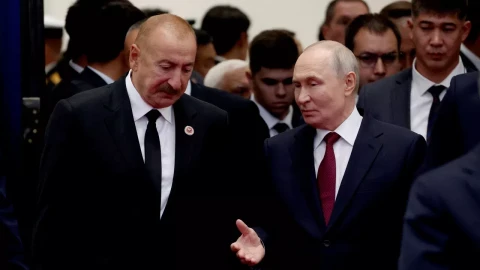
The press service of the RA Ministry of Foreign Affairs informed NEWS.am that the Armenian and Azerbaijani Presidents continued active negotiations. Three presidential meetings were held on Russian President Dmitry Medvedev’s initiative – in Sochi, on January 25, 2010, in Saint Petersburg on July 17, 2010, and in Astrakhan, on October 17, 2010.
The Foreign Ministers – through the mediation of the OSCE MG Co-Chairs, particularly of the Russian FM – held talks during the periods between the presidential meetings.
In 2010, the international community re-affirmed the approaches that had been apparent since 2008 and were incorporated in the joint statement by the 56 foreign ministers in Helsinki, as well as in the statements by the Heads of Delegation of the three OSCE MG co-chairing countries in Athens, in 2009, in Almaty in July 2010.
The principles and six elements underlying the peace process were incorporated in the statements of the Presidents of the USA, Russia and France in and Muskoka, in 2010.
The declaration approved by the Armenian, Azerbaijani and Russian Presidents in Astrakhan, October 27, as well as the statements by the U.S., Russia, France, Armenia and Azerbaijan, in Astana, December 1, 2010, proved most important documents.
Last year saw unprecedented destructive steps on the part of Azerbaijan, particularly provocations on the line of contact, frequent violations of ceasefire and attempts to shift the Nagorno-Karabakh peace process onto other agencies.
The Armenian side succeeded in receiving understanding and support for its position on the international community’s part.
All the international agencies dealing with the Nagorno-Karabakh conflict, as well as international mediators, show approaches that are in line with the ones shown by the Armenian side.