make preferable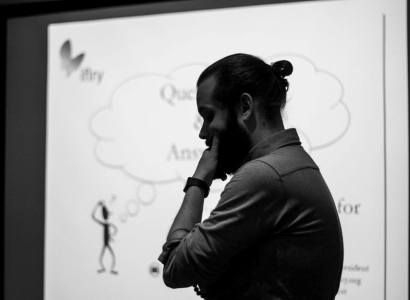
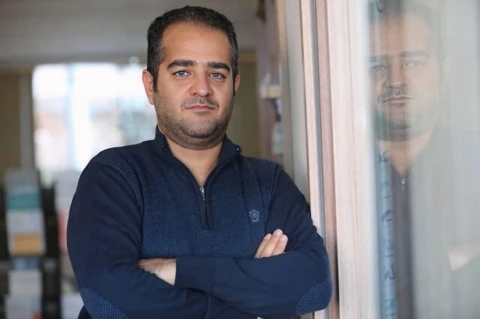
Armenia has quite a democratic culture and an evolving civil society, Sven Gerst, Secretary General of the International Federation of Liberal Youth (IFLRY), believes. In an interview with Armenian News-NEWS.am Sven Gerst, who is Master of Philosophy from the London School of Economics and Political Science (LSE), shared his view about political landscape in Armenia.
How does the distribution of political forces in parliament of Armenia design a political picture?
First of all, I think the recent parliamentary elections are a sign of hope and continue the positive trend after the so-called “Velvet Revolution”. As after any revolutionary movement, we now seem to observe a strong unity amongst the population—which basically seeks a peaceful and smooth transition as well as political stability. And so, the overwhelming majority for the “My Step” alliance (with more than 70% of the votes) does not come at a surprise; however, it should not come without an expression of concern and worry. I think there are two dangers that could come with such a large majority: first, the possibility of a big disappointment if the movement/government of Pashinyan will fail to deliver in terms of democratic transition, stability, territorial conflict, and economic progress; and second, such a majority equips the ruling party with a lot of power unchecked from the necessary balances of a pluralistic party and parliamentary system. Both of these dangers could (if manifested) result in a backlash to now hopefully forgotten times of authoritarian tendencies and Russian influence. Although these concerns might seem overly pessimistic at this point, they need to be taken seriously, even in times of hope and relief.
What kind of political preconditions are needed for economic development in developing countries like Armenia?
I am not a development economist, and neither am I specialized in the case of Armenia. However, as many economists would agree, it is robust institutions (formal and informal) that promote stability and economic development. Amongst these are the triad of democratic accountability, rule of law, and respect for human rights that build the cornerstones of liberal democracies; as well as the preconditions for a functioning market economy, such robust property rights (i.e. stable, guaranteed, and not to be overruled by the powerful and mighty), competition (i.e. anti-trust initiatives), and profit & loss (i.e. not bailing out the ones that cannot sustain this competition)—that ensure that the incentives and signals of the market can operate in a beneficial way. Yet, these institutions and the relevant social norms take time to develop but often do best when not interfered with by government intervention distorting the incentives and market signals by using subsidies, tariffs or other forms of economic protectionism.
How long does it take, in general, to sustain stability and economic development in the country after the revolution?
There is no clear-cut answer to such questions. My observation is that Armenia has quite a democratic culture and an evolving civil society. This means that a lot of efforts should be focused on establishing all formal and informal procedures to stabilize and recover the institutions of the rule of law. This means that corruption and the like has to become one of the core focuses of the new government, uncovering past corruption cases as well as establishing the norms that such behavior is not only punished but also is immoral and dangerous to social trust and long-term stability. Similarly, in the economic realm, I think there should be a strong focus on enabling much more competition in core industries and allowing for a much more inclusive marketplace. Retreating to the protection of local industries would be the wrong focus, I think. Promoting entrepreneurship and economic activity within the country can work without shielding them from outside competition. Armenians are smart enough to stand up for themselves on the global marketplace.