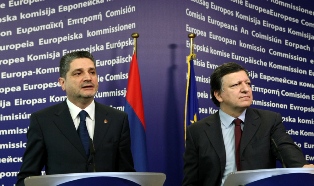
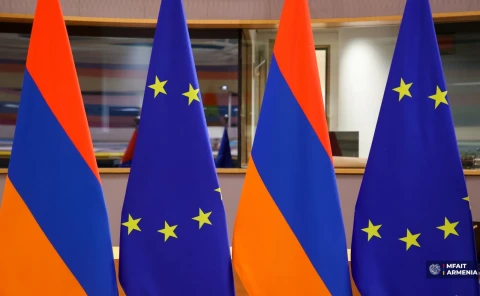
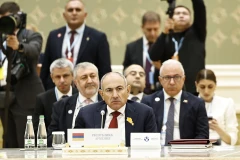
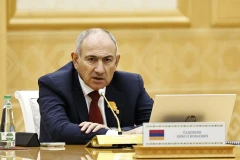
“The relations between Armenia and the European Union are on the move. We are particularly pleased with the very good progress in the negotiations on the future Association Agreement. This ambitious treaty will bring our political and economic relationship to a new level and draw Armenia closer to the European Union. It will in particular include the negotiation of a Deep and Comprehensive Free Trade Area, which will deepen Armenia’s economic integration with the European Union,” President of the European Commission José Manuel Durao Barroso stated at the meeting with Armenian Prime Minister Tigran Sargsyan in Belgium.
“I have therefore encouraged Prime Minister Sargsyan to intensify Armenia’s efforts in the area of trade-related reforms to achieve further progress on the institutional and administrative capacity,” he said.
After discussing the issue with the Prime Minister, I now understand that our Armenian friends believe that these reforms are also a priority for Armenia. It is in Armenia’s own interest. They are crucial for a better business and investment climate,” he noted.
“The Commission is also assisting Armenia with all the relevant support to meet the conditions, in particular through an institution-building programme and an Advisory Group. In this context, it is of course important that Armenia fully respects its WTO commitments and this is as important as is the need to deepen relations to make progress on democratic reforms,” Barroso said.
“I am therefore pleased to announce that we will start negotiations on visa facilitation and readmission agreements in the near future. This will make it easier for Armenians to travel to the EU, and promote contacts in all areas,” he said.
The officials also briefed regional issues.
“The European Union supports a peaceful resolution of the Nagorno-Karabakh conflict on the basis of the principles of non-use of force, territorial integrity and the self-determination of peoples. The status quo is not an option. We remain seriously concerned about continuing armed incidents at the line of contact in Nagorno-Karabakh and the ongoing militarization in the region. The European Union lends its full support to the OSCE Minsk Group and will continue to promote regional cooperation,” he emphasized.


 make preferable