make preferable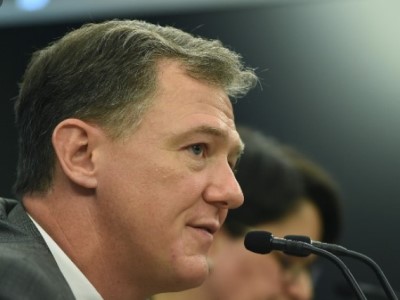
Washington believes that the best arrangements for engaging in regional security in the South Caucasus are "with the organization that was set up to deal with it, and that's the OSCE", a senior US State Department official said Tuesday.
Speaking before a Senate Foreign Relations Subcommittee, George Kent, deputy assistant secretary of State for European and Eurasian Affairs, explained that for the past quarter century, the framework for approaching security challenges in the South Caucasus - whether it's about Nagorno-Karabakh [(Artsakh)] or Abkhazia and South Ossetia conflicts - have been led by the OSCE. "This is the appropriate framework all of the countries that are involved are members and have shared commitment to values and processes."
The 3+3 regional platform proposed by Russia, however, "is a great departure from that values based all stake-holder process," Kent said. "It would be exclusive and would focus on regional infrastructure... Georgians are concerned because some of the designs that Russians have put on the table which actually circumvent Georgia with rail and road infrastructure in the same way that Nord Stream and TurkStream pipelines circumvent Ukraine for provision of gas to Western Europe. That is the threat that Georgia sees to this platform."
During his testimony before a subcommittee hearing on “Bolstering Democracy in Georgia,” Kent made it clear that the deployment of Russian troops as peacekeepers to Nagorno-Karabakh "now means Russia has boots on the ground in all three South Caucasus countries." Turkish and Russian troops now jointly man a cease-fire monitoring center in Azerbaijan.
For Kent, the 3+3 regional platform proposed by Russia, Turkey, and Iran "seeks to take advantage of this new dynamic to further increase Russian, Turkish, and Iranian influence in the region."
"We are currently exploring ways in which the United States can support greater cooperation among the South Caucasus countries while preserving their sovereignty and freedom of action," he added.
Washington believes that efforts to bolster Georgia’s Western orientation are "particularly critical in the aftermath of last year’s intensive fighting in Nagorno-Karabakh."