make preferable
The human rights situation in Azerbaijan has not improved in 2022, Human Rights Watch said in its annual report.
According to the report, in May, the authorities released more than 20 people imprisoned on politically motivated and bogus charges. But at least 30 more remained wrongfully imprisoned, and authorities continued to harass their critics and other dissenters.
The authors also note that restrictions in the law continued to hinder the independent activities of nongovernmental organizations (NGOs). Other persistent human rights problems included systematic torture and ill-treatment in detention facilities and restrictions on media freedom.
In July, amid an energy crisis caused by Russia's invasion of Ukraine and its manipulation of the country's hydrocarbon supply, the European Union signed an agreement with Azerbaijan aimed at increasing gas exports to Europe. The EU has not used the current negotiations on a broad bilateral agreement to ensure improvements in the human rights situation, the report noted.
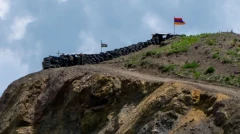
Fighting between Armenian and Azerbaijani forces broke out in mid-September when Azerbaijan invaded Armenian territory. The clashes were one of several disruptions to a Russian-brokered cease-fire brokered in 2020 that ended hostilities over the unresolved Nagorno-Karabakh war. Video footage confirmed by Human Rights Watch shows the extrajudicial execution of at least seven Armenian soldiers, apparently by Azerbaijani troops, during these battles, the report added.
Sporadic incidents of military action continued to threaten the safety and livelihoods of civilians living in Nagorno-Karabakh villages and along the Armenia-Azerbaijan border, they said.
The organization also claims that the Aliyev administration continues to harass its critics by using false drug charges against political activists and government critics. The report says that many of those arrested reported police brutality.
According to the structure, the number of political prisoners in Azerbaijan is about thirty. According to the authoritative organization operating in New York, the mainstream media in Azerbaijan continue to be under tight control of the government, and those who criticize the authorities face threats.
HRW has also criticized the authorities of the European Union, claiming that the European bloc has not used the debate on energy deals with Baku to improve the protection of human rights.