make preferable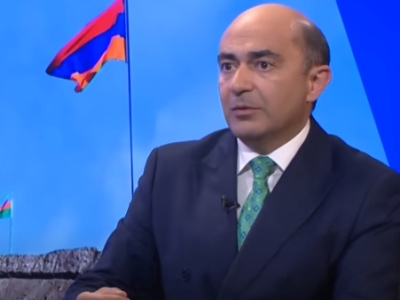
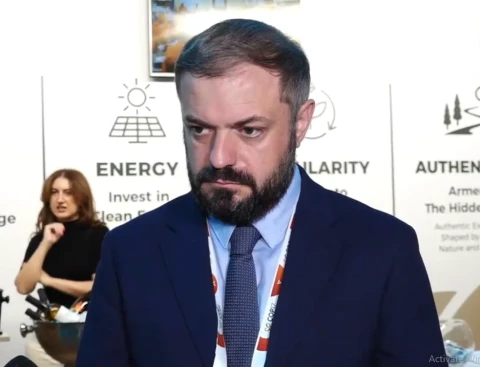
It is already a traditional practice in Azerbaijan that they first provide the information base by announcing that, for example, the armed forces of Armenia are firing at Azerbaijani bases, or they shoot at their own bases from Artsakh [(Nagorno-Karabakh)] bases. They constantly prepare this “information sauce,” after which the next [Azerbaijani military] aggression takes place. Ambassador-at-Large Edmon Marukyan stated this in an interview with Public Television of Armenia.
"In order for us to implement preventive measures in the information field, we inform the international community that Azerbaijan is once again spreading false information. The first is that there is no pre-emptive fire from Armenian positions ever. Secondly, Azerbaijan itself fires, gives a press release, then makes some kind of provocation on that formed information flow, which we have seen many times, and it is said retaliatory steps were undertaken," said Marukyan.
He emphasized that in this situation the Russian peacekeeping troops in Artsakh should be alert and ready for any provocation.
To the question of why Azerbaijan is resorting to such a provocation, whether it is in order to start a full-scale war because the peace talks are not moving forward, or whether the talks have started moving forward and Azerbaijan is trying to hinder its progress, Marukyan responded: "It has already become a practice that [Azerbaijani] attacks take place before the meetings, and when there was a vacuum in the talks, there were also large-scale actions at that time. (…)"
"Now we cannot say that there is a negotiation vacuum because the talks are going very intensively. Meanwhile, an attempt is being made to put pressure on the Armenian parties. It is expressed by carrying out various provocations on the ground, which is accompanied by an information campaign, which is very important. We have to take action against that information campaign; and the last statement of the [Armenian] MFA was about that," he added.
In terms of the possible results of the peace talks, Marukyan said: "We are talking about the end result. The end result should be that all existing issues are resolved. In the negotiation ‘menu,’ we have, for example, 15 questions, which, naturally, are not addressed in one day. As a result of the talks, one should move forward, solutions are being found step by step to every issue. The process is not standing still at this moment either, step by step solutions are being found and moving forward. No one can say when that end result will be because the solution of many complicated issues is still ahead."
As for which maps should be the basis of border delimitation between Armenia and Azerbaijan, Marukyan noted: "During the discussion in Chisinau, there was talk about the 1975 map of the General Staff of the Soviet Union, which was considered to be adopted as the basis during the discussion. Azerbaijan now declares that there is no such arrangement. By and large, Azerbaijan's statement should find a response from the European Council president as well."
Marukyan recalled that during the Washington meeting of Armenian Security Council Secretary Armen Grigoryan, Azerbaijani presidential assistant Hikmet Hajiyev, and US National Security Advisor Jake Michael Sullivan, it was clearly stated that there should be an international mechanism to ensure the rights and security of the Armenians of Nagorno-Karabakh, after which Azerbaijan stated again that they did not agree on any mechanism, although they discussed it.
"Previously, they announced that they do not discuss any issue related to Nagorno-Karabakh, as it is their internal matter. They discuss in a closed meeting, [but] they say in public ‘we did not discuss.’ Now the same is the story of the map. Naturally, the issue of maps was discussed, there was a perception that it would be the basis, but Azerbaijan says ‘no, we did not agree on that.’ The positive thing here is that there was a clear conversation about the specific map at such a high level," Marukyan emphasized.
And to the question whether there is a perception among the international community that there should be international guarantors in order to bring a possible Armenian-Azerbaijani peace agreement to fruition, Marukyan responded: "We now live in a world where anyone can be a guarantor for anything in any matter. Or even if he wants to, the circumstance of being a guarantor of it is constantly disputed because the world order created after the Second World War has collapsed, ended. Under these conditions, it is very difficult to say that this or that country or such and such body is ready to be a guarantor for the signing of the Armenian-Azerbaijani [peace] treaty. Nonetheless, there is no alternative to it, we must continue to work and find solutions."