make preferable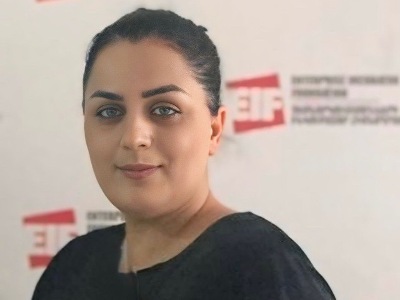
By Sara Babayan
Today inclusive education remains a critical pillar of Armenia’s social development. Few voices have shaped this field as consistently as Anahit Petrosyan, a leading expert whose work spans more than a decade—from regional reform to national crisis response. Her sustained involvement in designing and implementing special educational programs for children with disabilities and trauma has left a lasting imprint on inclusive education field across Armenia.
Babayan: Ms. Petrosyan, how would you describe the evolution of your work over the past decade?
Petrosyan: It has been a shift from building foundations to testing resilience. In Shirak, our early focus was institutional transformation and educator training. The real test came after the 2020 war, when schools were suddenly facing widespread trauma. That period showed us that inclusive education must also be crisis-ready—flexible, responsive, and grounded in real human needs.
Babayan: The trauma-sensitive curriculum you developed during that time is now being used in other regions. What are you seeing in 2025?
Petrosyan: The success lies in adaptation. The model was never meant to be copied exactly. In regions like Lori, inclusive educators are integrating core elements—such as expressive arts for emotional regulation—into their own community contexts. The results we’ve seen this year are encouraging and are shaping our plans for 2026.
Babayan: What does your work look like now, at the end of 2025?
Petrosyan: My time is split between analysis and expert reviews of inclusive educational program guidelines for teachers. I’m cooperating with school psychologists in Vanadzor while reviewing data from schools using adapted inclusive curricula. The field has moved beyond introductory training. What’s needed now is long-term guidance and expert support embedded in everyday practice.
My expert consultations this month, for example, have involved advising a Ministry of Education, Science, Culture and Sports working group on national standards for psychosocial support in schools for children with special educational needs. My expert recommendations are informed directly by our field data from this past autumn.
Babayan: Looking ahead, what should Armenia prioritize in 2026?
Petrosyan: Innovative practices exist, but we need stronger data on their long-term impact on inclusive learning and development. Inclusive education is not a one-time reform, it requires continuous monitoring and adjustment, tailored not just to regions, but often to individual classrooms. Our responsibility is to ensure that strong results today translate into lasting systems for the future. It is never ending process and requires continues monitoring and implementation of adjustments in educational curriculum based on specific needs of specific region and even classroom․