make preferable
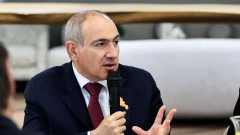
Konstantin Sokolov, a Russia-born private equity investor from Chicago, has been appointed chairman of a new U.S. State Department enterprise fund that will oversee the spending of more than $200 million intended to develop a trade corridor in Central Asia. The funds will be directed toward investments in transport, energy infrastructure, and the extraction of critical minerals. The Guardian reports this. The State Department confirmed his appointment.
Sokolov is one of 36 donors — including 21 corporations and 15 individuals and family foundations — who, according to Donald Trump, contributed more than $350 million to the White House “ballroom” construction project.
According to a study by Public Citizen, two-thirds of the corporate donors later received government contracts, while several private donors were appointed to senior advisory or government positions. Among them are healthcare magnate Benjamin Leon Jr., who became U.S. ambassador to Spain after donating to the “ballroom” project, and 80-year-old Oklahoma oil company chief Harold Hamm, who secured tax breaks for his company and helped shape Trump’s energy policy.
Sokolov became the latest donor to the “ballroom” project to receive a government position. The amount of his donation has not been disclosed. He had never previously held public office.
According to campaign finance data, during Trump’s second presidential term Konstantin Sokolov donated more than $12 million to Republican campaigns and political organizations, including $11 million to the presidential super PAC MAGA Inc. and $443,000 to the Republican National Committee. Earlier, he had been a modest donor to Barack Obama, contributing $3,600 to his 2008 election campaign.
Sokolov declined an interview with The Guardian and did not answer questions about his appointment. The White House referred all questions to the State Department.
The Tripp+ Enterprises fund, founded and chaired by Sokolov, takes its name from the Trump Route International Peace and Prosperity (TRIPP) project — a 27-mile trade corridor running through southern Armenia and Azerbaijan.
A State Department spokesperson said the $201 million fund is authorized to provide loans, equity investments, and grants to promote strategic private-sector development in the South Caucasus and Central Asia, including Armenia, Azerbaijan, Georgia, Kazakhstan, Kyrgyzstan, Tajikistan, Turkmenistan, and Uzbekistan.
The publication writes that during a visit to Yerevan in February, U.S. Vice President J.D. Vance called the Tripp+ fund part of a “historic transformation” that would “open up a whole new world of trade, transit and energy flows.”
When Secretary of State Marco Rubio and Armenian Foreign Minister Ararat Mirzoyan signed the TRIPP agreement in the fields of economics and security at the end of May, Mirzoyan told reporters that the sides were “laying the groundwork for a level of economic interaction that will allow Armenians to make money and prosper, and Americans to do the same.”
The Guardian notes that it remains unclear whether Sokolov or the United States will derive any benefit from the fund’s activities and whether he will be paid for his work.
It is noted that Konstantin Sokolov is a major shareholder in Armenia’s largest telecommunications company, Viva Armenia, holds leadership positions in the Northern Pillar Energy Consortium, which is implementing a subsea clean energy and fiber-optic communications cable project between Europe and Africa, and is also chairman of Pelagos Data Centres.
In addition, Sokolov is the founder of the Chicago investment firm IJS Investments, which specializes in future energy and telecommunications, as well as the Swiss investment company Gotthard Investment AG, which operates in financial services, energy, and global real estate.
According to a State Department spokesperson, the fund will comply with all legal requirements, including annual reporting, independent audits, as well as grant-making rules and conflict-of-interest prevention measures.
Sokolov has worked as an investor for more than 20 years, participating in international infrastructure and telecommunications projects. His biography also notes experience in providing strategic advice to governments and major companies.
A former USAID official noted that many wealthy political donors had previously headed American enterprise funds. As an example, the publication cites private equity founder Michael Granoff, a major Democratic Party donor, whom President Bill Clinton appointed chairman of the Albanian-American Enterprise Fund in the 1990s.
The publication also says that the Trump administration has already taken unprecedented steps to deepen relations with Armenia after a peace agreement between Armenia and Azerbaijan was concluded last August with White House mediation. The United States allocated $9 billion for the development of Armenian nuclear energy and also sold the Armenian government American reconnaissance drones worth $11 million, marking the country’s first delivery of U.S. military technology.
The Development Finance Corporation, the state investment arm headed by investor Ben Black, also announced plans to create Tripp Development Company to build rail and other infrastructure along the proposed route, which will connect Azerbaijan with its exclave of Nakhchivan, as well as Armenia and Turkey.
Sokolov’s appointment as head of the Tripp+ fund is seen as further evidence of the United States’ desire to promote the development of a strategic transport corridor linking Western Asia with Europe.
Since 1989, the United States has managed 13 enterprise funds. After the collapse of the Soviet Union, Congress allocated $300 million for investments in Hungary and Poland, and three years later authorized the executive branch to create similar funds in any country in Eastern Europe. The Tripp+ fund was created precisely under this post-Soviet legislation.
The Trump administration has also asked Congress to expand its authority to create such enterprise funds in any country in the world, as provided for in the draft 2027 budget.
In addition, there are signs that the amount of funding for Konstantin Sokolov’s fund will be increased. In April, Jeremy Levin, a senior State Department official for foreign assistance, told the Council on Foreign Relations that the department had already secured an additional $400 million for the Tripp+ fund.
“I think this is one of the pilot examples of how we are trying to reorient foreign aid, especially in the area of economic investment,” Levin said.