Preferred
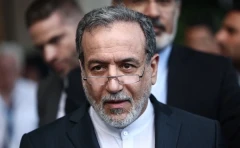
Last year did not bring closer the solution to any of the South Caucasian conflicts – the Nagorno-Karabakh, Abkhazian or Ossetian ones, Andrei Areshev, Deputy Director General of the Strategic Culture Foundation (Russia) told NEWS.am. Last year did not see any breakthrough in the Nagorno-Karabakh peace process, and “it is unlikely in 2010 either.”
“Maintaining the status quo seems to be the most optimistic scenario for the region. The primary reason is Azerbaijan’s radical position on Nagorno-Karabakh’s future status,” Areshev said. The situation is rather difficult, and an active information policy is a priority task for both Armenia and Azerbaijani authorities. This policy is in explaining to the mediators the essence of the conflict and the possible negative consequences the “unfreezing” may have.
“On the other hand, the Armenian side is well aware that surrendering even one of the regions or a small territory without any guarantees, with no one able to give them, is fraught with grave consequences for not only Nagorno-Karabakh, but also for Armenia,” the expert said.
As to the possibility of a new military conflict or the resumption of old ones, Areshev does not rule it out. On the other hand, he said that much depends on the conflicting parties. If they properly realize the actual estate of affairs and the fact that any changes of the status are possible only with reliable international guarantees provided, the situation will remain unchanged. Nagorno-Karabakh’s status will mainly be negotiated in 2010, Areshev said. “The negotiations may last as long as possible, which may cause discontent with the process or results. But any negotiations are better than no negotiations or resumptions of conflicts,” the expert said.
As regards the Armenia-Turkey reconciliation process, which, Areshev said, was the most significant event in 2009 and caused Armenians to experience ambivalent feelings, but the situation required concrete steps. “Unfortunately, there are the third parties, Azerbaijan and the United States, which, according to some information, proposed this initiative,” he said.
Any fundamental changes can hardly be expected in 2010. “As to the following years, I would prefer less historicism, as we can witness rather dynamic developments and may fail to recognize the map of the South Caucasus,” Areshev said. If Ankara goes on linking the Armenia-Turkey reconciliation to the Nagorno-Karabakh peace process, which is Azerbaijan’s wish, the process will reach a stalemate.
As regards the other conflicts in the South Caucasus – South Ossetia and Abkhazia –
Areshev pointed out that the situation is being consistently exacerbated, and the process will go on. “Gross provocations are possible late in 2010 and early in 2011,” he said. Although Russia recognized South Ossetia and Abkhazia as independent states, Georgia has not put us with the loss. Active militarization is under way in Georgia, and, as before, under the United States’ immediate direction. “Nothing has changed since the Bush Administration was in power – only it is not as public as before. The support is not so overt, but old methods are applied,” Areshev said. Georgia has considerably enhanced its army’s fighting efficiency since August 2008. “Russia, with its influence over the South Caucasus weakened in 2009, will have to meet new challenges,” the expert said. He expressed hope that Russia will intensify its role in 2010 and will make its foreign policy transparent.
T.P.