make preferable
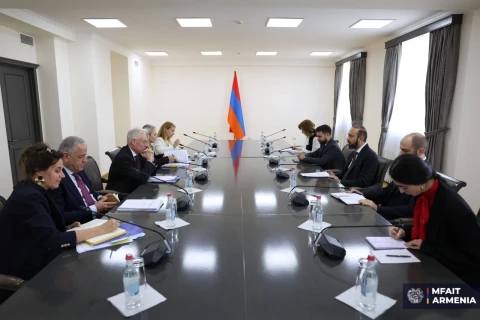
The Committee on Social Affairs, RA Parliament, held a heated debate on draft amendments to the RA Labor Code. Participating in the debate were government officials, trade unionists and NGOs’ representatives.
Over 90 amendments to the Labor Code are have been drafted. However, the point on verbal labor contracts in Armenia sparked off the fiercest debates. Trade unionists and NGOs’ representatives stated that the amendment will boost shadow employment and violations of workers’ rights by employers. In response, RA Deputy Minister of Labor and Social Security Hayk Petrosyan pointed out that verbal contacts are only possible with mutual consent of both the employer and employee. “A written contract has to be concluded should one of the sides disagree,” he said. A logical question arises: why introduce verbal contacts at all?
Another confusing point for the Committee members was the one on child labor. Petrosyan, however, pointed out numerous cases of children aged 5, 7 and 10 being wage workers. Thus, by making a relevant amendment to the RA Labor Code, the Government protects working children. He stressed that the document rules out the possibility of children doing work detrimental to their health. Also, at least one of the parents is supposed to give his or her written consent to the child’s employment. However, trade unionists proposed that both parents’ signatures be available in this case.
The point on pregnant women’s rights was another controversial issue. Specifically, an employer cannot dismiss a pregnant woman. However, the Committee members pointed out the document does not say anything about the post-childbirth leave. The Government’s representative assured the Committee that a woman working under an open-ended contract cannot be dismissed during three years after childbirth. The trade unionists remained discontented with the official’s explanation: they claimed loopholes in the document, and employers may interpret them in their favor.
NGOs’ representatives and trade unionists expressed their discontent with the point obliging employees to inform employers of their planned retirement 30 days before, whereas employers can inform employees just a few days before dismissing them. The only exception is layoffs – employers have to inform employees 60 days before. NGOs’ representatives stressed that equal terms have to be set for both sides.
The participants were critical of the point on overtime work. According to the bill, overtime work is to be done in the employer’s initiative, with the employee’s consent. However, Edward Tumasyan, Head of the Trade Union Confederation, stressed that all the six point ignore employees’ interests. He was critical of the fact that none of the Confederation’s proposals was incorporated in the bill.
The representative of the Union of Employers, in turn, stressed the necessity for defending employers’ rights. According to him, Armenian employers number 125,000, while the GDP totals U.S. $6bn. He pointed out the number of employers is 80,000 in Azerbaijan and 60,000 in Georgia, whereas the countries’ GDP is much higher. He claimed that Armenian employers are not strong enough, and stressed the need for developing the Armenian labor market.
The Parliament member Artsvik Minasyan stressed that that the Government-propose amendments may, by and large, be designed to protect workers’ interests. But the definitions contained in them are so vague that employers can at any moment aim them against employees.
The parliament member Koryun Nahapetyan underlined the necessity for enhancing trade unions’ role by means of the bill.
T.P.