Preferred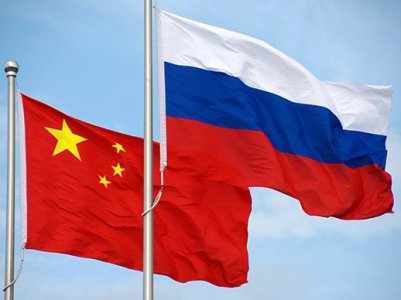
Armenian News – NEWS.am presents the abridged version of the article by Anita Inder Singh, published in Eurasia Review:
“Two events in May have confirmed strategic shifts by China and Russia. Both shifts simultaneously – and paradoxically – mark a strengthening of their ties, an uneven relationship and competition between them in Eurasia.
On May 8, President Xi Jin Ping was the guest of honor at Moscow’s Victory Parade; a few days later, on May 11 China and Russia started their first joint naval drill in the Mediterranean Sea, which ended on May 21.
Political and economic exigencies have driven Russia to refresh ties with China. The collapse of energy prices and western economic sanctions imposed after Russia severed Crimea from Ukraine in March 2014 have burdened its economy. So Russia needs cash to develop its infrastructure; it also wants to increase arms sales to keep its defense industrial machine well oiled. Once reluctant to sell state-of-the-art military technology to China, Moscow, now worried about Russia’s economic decline, recently offered its most advanced air-defense system to Beijing.
During Xi’s stay in Moscow President Vladimir Putin announced the creation of “a common economic space of Eurasia” which would harmonize China’s strategy of “one belt, one road” with the Russian-fostered Eurasian Economic Union (EEU) which currently comprises Russia, Belarus, Kazakhstan, Armenia and Kyrgyzstan. China’s investments in Russia highlight the parlous state of Russia’s economy and Moscow’s weak negotiating position. Apart from arms, energy and minerals Russia has little to offer China.
But the latest Sino-Russian entente is driven by more than economics. The recently conducted joint naval exercises in the Mediterranean Sea, which connects Europe, Africa and the Middle East showed off their military power and cooperation.
Over the last few years the Mediterranean Sea has acquired strategic importance for Beijing. China’s progress and global ambitions have steered its economic and strategical interests westwards, outside of Asia to the coasts of southern Europe, the entry point to the Black Sea, northern Africa and the Persian Gulf.
Economic interests could give impetus to the expansion of China’s military presence in the Mediterranean. To some extent China’s interest in the Mediterranean reflects its antagonism towards the US. China’s navy is unable to challenge America’s naval primacy in the Mediterranean. But China, determined to challenge the US in distant places, is increasing military spending at a time when America and its NATO allies are cutting defense budgets. That fact suggests that China could emerge as a competitor for influence in the Mediterranean especially in cooperation with Russia, with whom its Mediterranean relationship is likely to remain cordial.
Nevertheless, Sino-Russian cooperation cannot mask the rivalry for economic influence in Central Asia. With its economy in dire straits Russia, cannot offer Central Asian countries as much largesse and investment as China, which has supplanted Russia as the main donor to Central Asia.
Beijing has good reasons to invest in the infrastructure of Central Asian countries. Better transport facilities could link China to European markets and give China increased access to oil resources of Kazakhstan, the mineral deposits of Kyrgyzstan and the natural gas produced by Turkmenistan
As Russia’s moves eastwards and China westwards, finding common ground and deepening their economic and military ties, questions arise about the durability of their partnership if Chinese largesse and investment threaten Russia’s centuries-old clout over Central Asia. The unequal rapport between the “has-been superpower” and the aspiring great power masks their rivalry: Russia and China already players in a new Great Game in Eurasia."