Preferred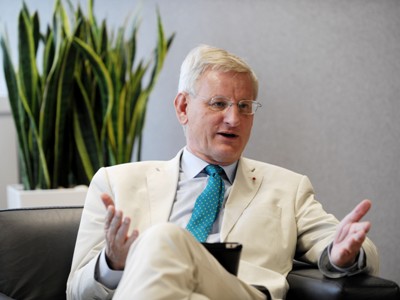
Armenian News – NEWS.am presents the short version of the article by Sweden’s ex-FM and ex-PM Carl Bildt, published in Project Syndicate:
“Turkey is moving into unchartered political territory, following the failure of the ruling Justice and Development Party (AKP) to retain its parliamentary majority in the country’s recent general election. The choices that Turkey makes in establishing a new government will not only be pivotal to shaping the future of democracy there; the next administration could also play a decisive role in a series of peace processes vital to restoring stability in the wider Middle East.
First and foremost for Turkey, there is the ongoing peace process with its own Kurdish population. A comprehensive settlement of the Kurdish issue within Turkey will be key to the country’s stability and the future of its bid for accession to the European Union.
The success of the mainly Kurdish Peoples’ Democratic Party (HDP) in capturing 13% of the vote in the recent election – a total well above the party’s core constituency – should boost the Kurds’ confidence and ease the way ahead in the peace process.
But the far-right Nationalist Movement Party (MHP) performed strongly in the election, capturing 16% of the vote, probably owing largely to popular opposition to the opening to the Kurds.
A high priority for any new government in Turkey should be to complete the peace process that Erdoğan began. And Erdoğan should understand that his legacy might well be shaped by whether that process succeeds or fails.
The second peace process at stake is the new attempt to unify Cyprus, which has been divided since its constitutional breakdown in 1963 and Turkey’s invasion in 1974. Indeed, it is bizarre that the capital of an EU member country is divided by a dead zone patrolled for decades by United Nations peacekeeping troops.
The continued division of Cyprus is blocking both the EU accession talks with Turkey and increasingly necessary cooperation between the EU and NATO.
The third peace process in play concerns Turkey’s relationship with Armenia, which, if improved, could help create the conditions for a peace settlement between Armenia and Azerbaijan. Maintaining the frozen conflict with Armenia is not in the long-term interests of Turkey or any other state in the region. The ongoing blockades and military face-offs could, at some point, lead to violent upheaval in the southern Caucasus, with very negative effects for Turkey. The next government should resume the approach it took in Zürich – and Armenia’s government must do the same.
The immediate task facing Turkey is to bridge old divisions and establish a functioning coalition government. Otherwise, a fresh election – and thus fresh political uncertainty – will be unavoidable.”