make preferable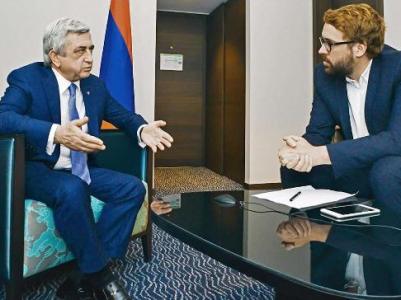
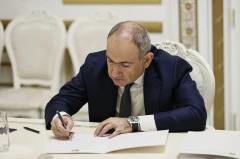
President of Armenia Serzh Sargsyan spoke to Bild daily newspaper of Germany, ahead of Thursday’s German Bundestag debates on the draft resolution on Armenian Genocide.
Armenian News-NEWS.am presents below the English-translated abridged version of this interview.
(…) Why is it so important that the German parliament recognize the 1915-1916 Armenian Genocide?
It’s about remembering the Armenian martyrs of the violent crime in 1915, and keeping the memory alive (…). It’s very important for our country that the Bundestag wants to adopt this resolution. But not only that is important, but also that such genocide shall no longer take place anywhere in the world.
Many German politicians (…) are afraid that Turkish President [Recep Tayyip] Erdoğan, who denies the Genocide, may take political revenge.
None of the German politicians disputes that it was genocide (…). For German politicians, universal values need to be more important than short-term political interests (…).
Are you understanding [toward the fact] that German politicians are afraid of a sharp response by Erdoğan?
No, I can’t understand it. Germany is a powerful country, and the voice of the Bundestag can be heard anywhere in the world. And that is why Germany has a special accountability, and it has no right to compromise on ethical issues (…).
And what will happen if, after the [passing of the] Bundestag resolution, Erdoğan were to foil the refugee deal?
I have a feeling that this deal is already on flimsy grounds, and it’s difficult to always implement it with a partner like Turkey. (…) I’m definitely sure that the failure of the refugees’ deal has nothing to do with the genocide resolution (…).
Can Europe somehow trust Erdoğan at all?
(…) We [i.e. Armenians] don’t trust Erdoğan, and the matter is not only Genocide denial. We have been trying for years to build diplomatic relations [with Turkey] (…). In my view, Europe should not blindly trust Turkey, but rather find its own solutions to resolve the refugee problem.
Armenia is at war with Azerbaijan over Nagorno-Karabakh [(Artsakh)]. What is the [present-day] situation there?
At the moment the situation is calm, there are no shots [being fired]. But when the armed attack of Azerbaijan began [in early April], we didn’t see international solidarity (…).
What do you ask for from the international community?
Armenia is a small country. It’s clear for us that we are perhaps less interesting, economically. [But] for us it’s important that injustice be called injustice. First of all, it would be sufficient for us that ample number of European voices condemn the act of Azerbaijan. If it’s not enough, we can also envision sanctions, as a further step.