make preferable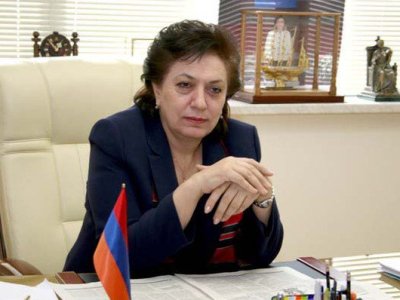
YEREVAN. - A video conference with the representatives of Sweden’s Armenian community took place at the Armenian Ministry of Diaspora Saturday. Armenian Diaspora Minister Hranush Hakobyan, Deputy Ministers Serzh Srapionyan and Vahagn Melijyan, Chief of the Ministry staff Firdus Zakaryan and other ministry workers took part in it.
On the other side of the line were the Armenian Ambassador to Sweden Artak Apitonyan, head of Coordination Center of Armenian Unions of Sweden Arshak Gavafyan, Chairwoman of Armenian Relief Society (ARS) Silva Gyuluzyan, Embassy workers and community representatives.
Referring to the April developments, Minister Hakobyan attached importance to the support provided to the Nagorno-Karabakh Republic (NKR/Artsakh) by the Swedish community. She specifically noted: “Following the four-day April war, the Armenian Diaspora became more united: protests, rallies and crowdfundings were organized, as well as funds were established. The assistance continues till now. Our main issue today is the strengthening of Armenia and Artsakh. Only strong Armenia can solve the Artsakh issue. We must think of raising Armenia’s rating through our capacities, knowledge and ties. This must be the issue of each Armenian community. The international recognition of Artsakh is the most important issue.”
The Minister also underscored the importance of preserving the Armenian language as a strong factor of preserving the Armenian community and national identity.
Armenian Ambassador to Sweden Artak Apitonyan also welcomed the video conference participants. He noted that the Swedish Armenian community is actively involved in pro-Armenian activity. According to him, the number of Armenian Sunday schools in the country has increased, the Armenian Apostolic Church also being very active.
The Ambassador attached special importance to the involvement of youth in the activities of community institutions.
For his part, Head of the Coordination Center of Armenian Unions of Sweden, Arshak Gavafyan, expressed hope that the video conferences with the Ministry will be of continuous nature, and the community will be more involved in the programs of the ministry. He also noted that the Center and the “Hay Dat” office are carrying out certain informational and lobbying actions.
Community issues and further plans were also discussed.