Preferred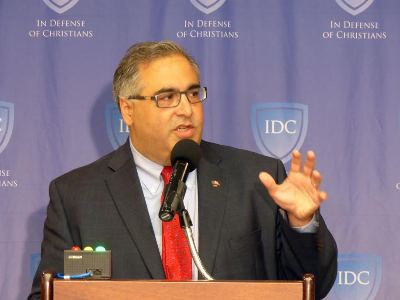
YEREVAN. – With the upcoming U.S. presidential elections in November, the Armenian American community relies less upon campaign promises on the Armenian Genocide and more upon the political strength of the community itself. Armenian News-NEWS.am interviewed the Executive Director of the Armenian National Committee of America Mr. Aram Hamparian to learn about community’s expectations.
What is the Armenian community of America expecting from this year’s presidential vote? Is there difference in positions of the presidential candidates on the Armenian Genocide?
This year's presidential elections are marked by the contrast between an outsider candidate and an insider candidate and the general polarization of the American electorate.
Secretary Clinton has an extensive record and a meaningful level of understanding regarding a range of Armenian issues, including, unfortunately, some highly objectionable actions and statements. Among these were her public assertion that the Armenian Genocide is a matter of “historical debate,” her ultimately successful efforts to defeat the Armenian Genocide Resolution before the U.S. House in late 2010, and the pressure she applied to Armenia to accept the reckless and irresponsible terms of the Turkey-Armenia Protocols.
By way of contrast, Donald Trump has essentially no record on Armenian issues, short of his multi-million dollar hotel ventures in Turkey and Azerbaijan. In Baku, his business partners included the son of Azerbaijan's Transport Minister, Anar Mammedov, whose Azerbaijan America Alliance spent over $10 million lobbying against Armenian American interests from 2012 - 2015. Mr. Trump has not yet made any public statements on issues of special concern to Armenian American voters - such as the Armenian Genocide, Nagorno Karabakh, and U.S.-Armenia relations.
As someone involved in American politics for more than a generation, Hillary Clinton tends to have more connections to our community than Donald Trump, who is new to electoral politics.
There are ardent backers of both among Armenian Americans, as well as many who are dissatisfied with the two options offered this year by America's two major parties.
Can we expect that there can be shifts in Washington’s policy on the Armenian Genocide and other issues concerning Armenians after the elections?
If we have learned anything over the past several election cycles, it's that we cannot be certain what either candidate would do after the election, even if they were to issue campaign pledges about the Armenian Genocide or other issues of special concern to Armenian Americans. As a practical matter, we rely less upon campaign promises and more upon the political strength of our community and the moral capital of our cause.
Do you think any particular candidate’s election to the post might bring changes to Washington’s position on Turkey?
Changes to the U.S.-Turkey relationship are being largely driven by Ankara, which is increasingly distancing itself from the U.S.-led security architecture of the post World War II era, so it's not clear at all that this election will mark a watershed in this regard.