make preferable
By Samvel Avagyan
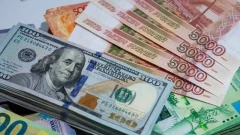
During the New Year holidays, when no exchange business transactions were effected, the AMD market exchange rate was stable. January 1 to January 8, almost all exchange offices set the following exchange rates: purchase U.S. $1/360 AMD (purchase), and U.S. $1/365 AMD (sale). It was not until January 9 that the margin narrowed to 361 AMD/U.S. $1 and 365 AMD/U.S. $1 respectively.
Today, January 10, resumed exchange business transactions destabilized the exchange rate. A total of U.S. $1.4 million have been sold, the average exchange rate being 363.94 AMD/U.S. $1. The highest daily exchange rate was 364 AMD/U.S. $1.
This is another piece of evidence that the stock exchange should not be viewed as an indicator of economic processes. The stock exchange is only a small part of the financial market, its currency turnover being six times as less as that of the banking system (exchange offices). By means of their exchange offices, banks purchase an average of U.S. $300 million a month against U.S. $50 million purchased by means of stock exchange. As regards Russian roubles and Euro, exchange offices meet the demand. Thus small-scale transactions result in exchange fluctuations.