make preferable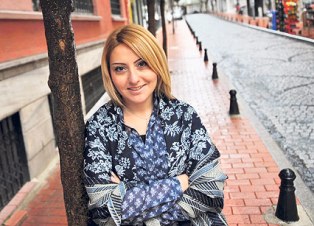
“Ties between Turkish and Armenian people have been improving despite closed borders, thanks to civil society projects,” says researcher Alin Ozinian, who is known for her “State of Armenian Irregular Migrants in Turkey” research study, Today’s Zaman daily reports.
“Ozinian, an Armenian from Turkey, emphasized that in addition to the numerous problems that illegal Armenian migrants working in Turkey face, they are adversely affected by being put under the spotlight whenever tensions rise in Armenian-Turkish relations,” the daily reads.
In an interview with Today’s Zaman, Ozinian talked about the state of the irregular Armenian migrants in Turkey and her ongoing work conducted for the Turkish-Armenian Business Development Council (TABDC), where she has been serving as press secretary and regional projects coordinator.
NEWS.am posts the excerpts from the interview, published in the daily:
One of the problems is in regard to the education of those illegal migrants’ children. We haven’t seen any steps in that direction, have we?
No, we haven’t. Armenian migrant children do not often continue their education after coming to Turkey, and those born here have no official birth certificates. As there is no Armenian consulate or embassy in Turkey, they are children without identities or a nationality. There is now an underground school in Istanbul where about 70 children are educated by volunteer Armenian teachers. Those children should be able go to the Armenian minority schools in the city.
What else can be done?
If Turkey wants those people to stay here, then they can issue work permits to those who have been here for a certain number of years. If Turkey does not want those people here, then it can change its visa regime and can make it more difficult for Armenian citizens to enter Turkey. But the Turkish government has a unique understanding of the issue. For Ankara, it is a good gesture, a show of good will that those migrants are not deported. Those Armenian migrants have become the tools of Turkish foreign policy. The fact that the issue is about human lives has not been considered.
What else can be done?
If Turkey wants those people to stay here, then they can issue work permits to those who have been here for a certain number of years. If Turkey does not want those people here, then it can change its visa regime and can make it more difficult for Armenian citizens to enter Turkey. But the Turkish government has a unique understanding of the issue. For Ankara, it is a good gesture, a show of good will that those migrants are not deported. Those Armenian migrants have become the tools of Turkish foreign policy. The fact that the issue is about human lives has not been considered
Civil society projects between Turkey and Armenia seem to turn those perceptions upside down.
Perceptions, stereotypes really started to turn upside down because of the work done by civil society. Indeed, even if the border is closed, trade, projects and even love flourish between the two societies. A friend of mine told me that a Turk and an Armenian who met during the course of a European Union project fell in love. Borders cannot put barriers before human feelings.