make preferable
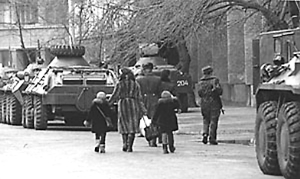
On January 13, 1990, genocide of the local Armenian population began in Baku, Azerbaijan. That day Azerbaijan began committing genocide it has not completed so far, Larisa Alaverdyan, Secretary of the Heritage parliamentary faction, told journalist January 14. She pointed out that Azerbaijan has not since changed its policy. Rather, the atrocities committed by that country have been getting worse one after another, she said.
Mrs. Alaverdyan said that the events in Baku in 1990 were not at all a new phenomenon. Rather, it was a follow-up to Azerbaijan’s policy since it was formed in 1918. “In fact, Azerbaijan continued the genocidal policy launched by Turkey. Evidence thereof is the incessant statements by high-ranking Turkish and Azerbaijani officials that they are one nation, two states,” she said.
Mrs. Alaverdyan voiced the opinion that Azerbaijan has not so far abandoned this policy. “Before the 1988-1992 pogroms, 240,000 Armenians had resided in Baku alone. Azerbaijan resorted to various forms of vandalism, which can be qualified as genocide. Ethnic cleansing, pressure and persecutions ended in Armenian pogroms in Baku. The Baku massacres in 1990 were an appalling atrocity,” Alaverdyan said.
The atrocities were committed not only against Armenians, but also against other national minorities residing in Azerbaijan. What Azeris did to Russians was an atrocity, but Russian political figures would not respond to the massacre because of their oil interests.
The international community has not so far made a proper assessment of Azerbaijan’s atrocities in 1988-1992. The Baku Armenians have not so gar received compensations. The massacre was so cruel that the exact number of murdered Armenians, as well as the victims that died later, in various parts of the former USSR, has not so far been specified.
According to various data, 150 to 300 Armenians were murdered in Baku January 13 through 19. However, the official data do not include the people that died from traumas later in different parts of the USSR, Alaverdyan said.