make preferable
Armenian News-NEWS.am posts the article “Egypt and the former Soviet Union” by Amanda paul, published in Today’s Zaman daily.
“While Egypt remains in political turmoil, there has been growing speculation over whether similar events could unfold in other parts of the world, particularly the states of the former Soviet Union and Russia,” the daily reads.
“Many of these states are ruled by autocratic and dynastical leaders who have been in power for years, regularly part of a clan, frequently surrounded by an inner circle of oligarch-type characters, often with secret service or security backgrounds which help consolidate their power,” the source says.
“These guys have no desire to relinquish power and rarely hesitate to use force to quell opposition. This was the case recently in Belarus, in Armenia in 2008 following presidential elections and in Uzbekistan in 2005, when almost 200 people were beaten by the country’s security apparatus in Andijan. While events in North Africa may have been food for thought for some of these regimes, the chances of a wave of change washing over this region is slim. Firstly, because their political systems are very different, being deeply imbedded in post-Soviet intelligence structures, and secondly, because some states have already witnessed “color revolutions” -- Georgia’s Rose revolution, Ukraine’s Orange revolution, and Kyrgyzstan’s Tulip revolution -- which failed to deliver the desired changes, with two of them actually being reversed. However, they helped embolden other regimes in the region,” the author emphasizes.
“The states of the former Soviet Union are a diverse bunch, ranging from rich energy producing nations to impoverished and isolated countries. Most have security concerns, a number have closed borders and at least three are embroiled in conflicts with neighbors. Only Ukraine, Moldova and Georgia have held free and fair elections in recent times and have systems of democracy that far surpass those of the other states. There are also active opposition parties and civil society,” the daily reports.
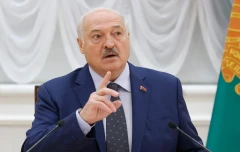
“Russia has been the subject of most speculation over whether events in Egypt could trigger something similar, with some drawing direct parallels between Egyptian President Hosni Mubarak and Russian Prime Minister Vladimir Putin. However this is not accurate. While Putin has numerous faults, many Russians still seem to support him and his partner in crime, President Dmitry Medvedev. The same is true about Belarusian leader Alexander Lukashenko, who came under fire from the West following the Dec. 19 presidential elections when security forces beat numerous members of the opposition and civil society. While pro-Western factions and human rights activists in Russia and Belarus continue to condemn their leaderships, it is unlikely to lead anywhere yet. With the backing of their countries’ security and military apparatuses, weak opposition and swathes of people still “tolerating” them, they are presently too powerful to dislodge. However, further down the road, particularly in light of Russia’s declining energy-dominated economy, this situation may change. However, Russia’s next president will still be decided by Putin and Medvedev,” the daily reads.
“In Azerbaijan and Armenia, however, neither leadership is in danger. Both are moving to integrate further with the West, and both declare they are taking steps to improve their democratic credentials. Public demonstrations are becoming more common, and in recent days Azerbaijan has started to implement anti-corruption measures. The biggest threat remains that of renewed war over the Azerbaijani province of Nagorno-Karabakh,” the author says.
“All in all it seems unlikely that any sweeping change of the kind seen in Egypt will take place in this region in the short term. Indeed, if the unrest in the Middle East spreads, it may offer benefits to the energy-rich Central Asian states if the oil sector is further disrupted. However, in the long run there are greater risks, and it would therefore be in the interest of all these countries to “learn” from the Egyptian experience,” the author concludes.