make preferable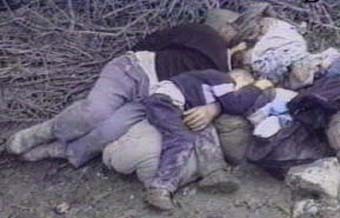
By Ivan Gharibyan
Nineteen years have passed since the appalling tragedy in Marag. The events in that village in northern Karabakh stand out even amid the Azeri military’s cruel and inhuman actions during the Karabakh war.
Early in the morning on April 10, 1992, the Azeri troops launched their ruthless assault, supported by the artillery. A small group of Armenian freedom fighters warned the local citizens they had to retreat.
Most of the villagers left, but many old and disabled people, as well as women with their children, were unable to. They fell victim to the brutalized Azeri military that burst into the village. The next day, after the Armenian freedom fighters liberated the village, they saw a horrifying scene: dead bodies of women, children and old people, most of them beheaded, with their eyes put out. That was the inhuman image of part of the Azeri people that “took up a struggle for freedom, independence and territorial integrity.”
The Aliyev clan, which came to power in 1993, committed one more crime that can “easily compete” with the most vicious murders of civilians. The leaders of the gang that committed the atrocities in Marag received government awards, which is not surprising though. The Alley of Martyrs (Alley of Shahids), a place near Baku, is the burial place of the executors of Armenian pogroms in the capital of Azerbaijan on January 13 to 19, 1990. They are “national heroes” and “fighters for freedom and independence” in modern day Azerbaijan – the same heroes as Ramil Safarov, who beheaded a sleeping Armenian officer.
This is the “prosperous” Azerbaijan “in the image and after the likeness” of the Aliyev clan, whose crimes have not so far been universally condemned.