make preferable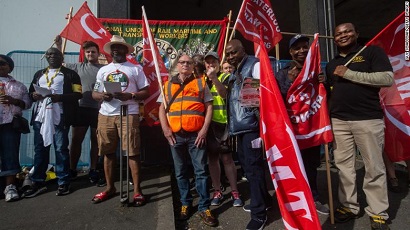
The UK is in a summer of misery as the health service collapses, inflation rises, taps run dry and strikes bring trains to a halt. Meanwhile, the government is nowhere to be seen, CNN reported.
Inflation topped 10% earlier this week, putting additional pressure on households that are already struggling to make ends meet. The country is on the path to recession and GDP is expected to continue to decline through the end of the year and beyond.
On top of the economic pain, transport and dock workers are on strike, and there are warnings of more strikes in the public and private sectors. Even some criminal defense lawyers went on strike, disrupting already overcrowded courts.
Outgoing Prime Minister Boris Johnson, however, is on his second holiday this summer. When asked why Johnson did not return to London and develop an urgent plan of action, Downing Street replies that the next prime minister should take the main spending plans.
Johnson's successor, either Liz Truss, the current Foreign Secretary, or Rishi Sunak, the former Treasury Secretary, will not be appointed until Sept. 5 at the earliest.
A government spokesman told CNN that while fiscal decisions for the coming months will be made by the next prime minister, we continue to provide financial support to the people right now as part of an existing £37bn package that will continue to flow over the coming weeks and months to help people with a rising cost of living.
She added that next week the UK energy regulator will announce an increase in the electricity price ceiling. Against the backdrop of rising inflation to 10.1%, this will not only lead to a further increase in household anxiety, pushing them to further reduce spending in anticipation of winter. But it will create another shock to our economy. With businesses and households on edge, we cannot wait to act.
Electricity price caps are a government-imposed back-up mechanism that prevents energy companies from overcharging consumers.
Given the severity of what is about to happen to the country, even Johnson's former allies and die-hard conservatives cannot understand why the ruling party seems pleased that things are going their way.
None of the leadership candidates provided concrete examples of what specific measures would be taken to deal with what would be a hellish winter for many. A cynic might say that this is because any solution would require huge government spending, which is not to the liking of the traditional members of the Conservatives who will choose the next prime minister.
It may also be because government spending of this magnitude cannot be explained in the same breath with promises of immediate tax cuts and a refusal to raise taxes on big businesses, including energy companies, to finance a recovery from the crisis.
However, it won't be long before Johnson's successor has to answer to a wider group of critics. First, in front of their political opponents in parliament. Then before the general public at the ballot box.
Failure to act when dire warnings are issued weekly could be an inevitable mistake that will cost the Conservatives the next general election. And after more than a decade in power, the public will not forgive them for "sleepwalking" in a crisis, the channel notes.