make preferable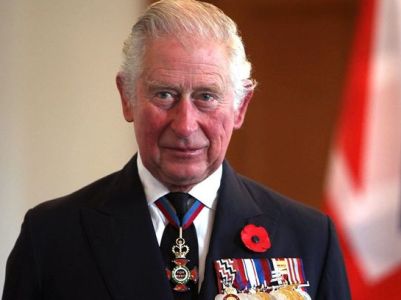
Britain's new King Charles the Third will be formally proclaimed monarch at the historic Council of Succession on Saturday, September 10, according to The Telegraph.
Prince Charles automatically became king after the death of his mother, Queen Elizabeth II. The Council of Succession usually convenes at St. James's Palace in London within 24 hours of the sovereign's death. This time it will be later because the announcement of the queen's death was made Thursday evening, meaning that there was not enough time to put plans in motion for Friday morning.
Historically, the entire Privy Council convenes at the Council of Thrones to oversee the official proclamation of a new monarch. But with the number of Privy Councillors, who are lifetime members and mostly former and current politicians, now at over 700, restrictions have been imposed - only 200 will be summoned.
The Council of Succession must take place before Parliament meets, which must convene as soon as possible after the death of the sovereign. It is divided into two parts and is headed by the Lord President of the Council, who has ministerial responsibility for the office of the Privy Council.
Penny Mordaunt was appointed Lord President of the Council and head of the House of Commons on September 6 in the new Liz Truss cabinet to replace Mark Spencer, and the Queen has formally approved the appointment.
Elected Privy Councillors--without the king--will gather at St. James's Palace to proclaim the new sovereign, joined by state officials, the Lord Mayor, the kingdom's high commissioners, and some high-ranking civil servants. If any of the invited counselors are unable to attend on short notice, the Council may still take place.
Camilla - the new Queen - and the Duke of Cornwall and Cambridge are already Privy Councillors, so will be present. When the meeting begins, the Lord President announces the death of the sovereign and calls upon the Secretary of the Council to read aloud the text of the Proclamation of Succession.
The latter includes the king's name. Charles has already chosen his name, Charles Charles III.
Then Camilla and Prince William, the Archbishop of Canterbury, the Lord Chancellor, the Archbishop of York, the Prime Minister, the Lord Keeper of the Seals, the Lord Hofmeister, the Earl Marshal and the Lord President sign the Proclamation.
The Lord President then calls for silence and reads out the remaining questions concerning the distribution of the Proclamation and the various orders giving instructions for the firing of arms in Hyde Park and the Tower of London.
The king then enters and holds his first council, at which only secret advisers are present. First he will make a personal declaration of the queen's death.
One of his next acts will be to take an oath to preserve the Church of Scotland because there is a separation of powers between Church and State in Scotland. He will read it aloud and sign two identical documents recording the taking of the oath, his signature witnessed by Camilla and William as well as others, including the Secretary of State for Scotland and the First Minister of Scotland.
The other oath, the Declaration of Accession, to preserve Protestant succession, is usually administered a few months later at the state opening of Parliament. Other matters will be considered, including the use of the Seals to "promote the continuity of government."
Privy Counselors will sign the Proclamation. The official minutes of the meeting will be published in a special supplement to the London Gazette.
After the Council of Accession, the first public proclamation of the new sovereign will be read outdoors from the balcony of the Monastery Court by the Heraldmistress of the Garter at St. James's Palace in the presence of the Earl Marshal and two sergeants-in-arms of the sovereign. The Proclamation will then be read at the Royal Exchange in the City of London.
It will also be publicly read in other cities, including Edinburgh, Cardiff and Belfast, and usually in Windsor and York, where the mayor traditionally drinks to the health of the new sovereign from a golden cup.
Coronation
The symbolic pinnacle of the succession process will be the coronation ceremony, when Charles formally receives the crown. Because it requires proper preparation, it is unlikely to take place soon after Charles ascends the throne. Queen Elizabeth II became monarch in February 1952, but she was crowned only in June 1953, according to the BBC.
During the last 900 years the coronation took place in Westminster Abbey. The first British monarch to be crowned there was William the Conqueror and Charles would be the fortieth.
The ceremony is an Anglican church service conducted by the Archbishop of Canterbury. At the end of the coronation, he will place on Charles's head the crown of St. Edward, made of pure gold in 1661.
It is the main object among the British crowns kept in the Tower of London, which the monarch wears only at the moment of coronation (not least because it weighs as much as 2.23 kg).
Unlike royal weddings, the coronation is a state event, and the government pays for its organization - and it also draws up the guest list.
During the coronation, there will be music, excerpts from various texts, and a ritual anointing of the new monarch using various oils, including orange, rose, cinnamon, musk, and amber.
The new king will take his coronation oath in front of the world. In an elaborate ceremony, he will receive an orb and sceptre as symbols of his new role, and the Archbishop of Canterbury will place a golden crown on his head.
Head of the Commonwealth of Nations
Charles becomes head of the Commonwealth of Nations, an association of 56 independent countries with 2.4 billion people. In addition to Great Britain, he will be the head of 14 nations.
Among them: Antigua and Barbuda, Australia, the Bahamas, Belize, Canada, Grenada, Jamaica, Papua New Guinea, Saint Christopher and Nevis, Saint Lucia, Saint Vincent and the Grenadines, New Zealand, Solomon Islands and Tuvalu.