make preferable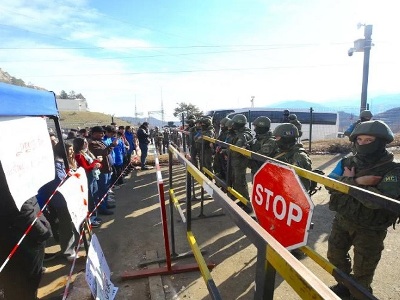
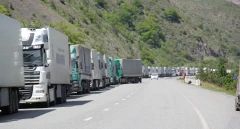
The road of life of Artsakh has been closed for a month already. On December 12, 2022, a group of Azerbaijani pseudo-environmentalists, among whom the world press identified employees of Azerbaijani state agencies and special services, blocked the Lachin corridor, controlled by Russian peacekeepers, which connects Artsakh with Armenia and the world. 120,000 inhabitants of Artsakh appeared in blockade. The authorities of the republic introduced a system of food stamps. Power cuts have occurred in Artsakh because of an accident on the only high-voltage power line. Azerbaijanis block access of Artsakh specialists to the breakdown site; rolling blackouts have been introduced in the republic.
Azerbaijani blockade resulted to a humanitarian catastrophe
The Azerbaijani operations resulted in a humanitarian crisis for the 120 thousand inhabitants of Artsakh, of which 30 thousand are children. 1,100 citizens, 270 of whom are minors, can't return home because of the blocked road. 11 children are in the neonatal department and resuscitation department of the children's hospital, 9 adult patients are in the resuscitation department, 4 of them are in extremely serious condition; 114 babies have already been born under the blockade.
To date, due to the termination of scheduled operations in all medical institutions of the Ministry of Health of the Republic of Artsakh more than 370 citizens are deprived of the opportunity to operate on health grounds. Until today, 16 patients have been moved to Armenia through the mediation and with the accompaniment of the ICRC in order to receive appropriate treatment. In Artsakh all planned operations have been temporarily suspended.
690 small and medium-sized enterprises (14.7 per cent of the total) have ceased their activities owing to their inability to operate under the blockade. Because of the difficult economic situation, at least 3,200 people have lost their jobs.
More than 12,000 tons of essential goods would have been delivered to Artsakh if not for the blockade, during which the International Committee of the Red Cross and the Russian peacekeeping contingent have delivered only a fraction.
Every day more than 400 tons of food and medicines cannot be delivered from Armenia to Artsakh. The complete transport blockade threatens a shortage of food, medicines and fuel.
In the evening of December 19, it became known that one of the patients of Stepanakert hospital died. Because of the road blockade by the Azerbaijanis, he could not be transported to Yerevan. Another patient in need of urgent heart surgery was allowed to be transported by an ambulance escorted by the International Committee of the Red Cross, Russian peacekeeping troops and the police.
On December 24, representatives of the International Committee of the Red Cross transported a 4-month-old baby in serious condition from Nagorno-Karabakh to Armenia. The ICRC vehicles that went to Armenia for the baby will soon return to Karabakh with medical supplies.
According to Zara Amatuni, responsible for the communication programs of the International Committee of the Red Cross in Armenia, during the entire blockade until January 7, more than 10 tons of medicine, baby food and hygiene products were brought from Armenia to Nagorno-Karabakh with the Red Cross mediation (10 tons were brought by an ICRC truck on December 25), only once food products were sent.
On January 3, the Artsakh authorities ordered to proportionally distribute products from the state reserve to the stores, and it was decided to limit the work of public catering due to the lack of food and the need to save energy.
Because of the food shortage caused by the blockade, pre-schools and all-day schools were closed. Because of the worsening food shortage under the blockade, 41 kindergartens, 56 preschool groups and 20 all-day schools were closed.
6,828 children can no longer attend kindergartens, pre-schools and all-day schools, being deprived of adequate care, food and education.
On 10 January, the only high-voltage power line feeding Artsakh from Armenia had an accident. Because of the destructive position of the Azerbaijani side it's impossible to organize emergency recovery work in this section, in connection with what it was decided to carry out energy supply of the republic at the expense of local stations, with appropriate restrictions. Based on the situation, fan outages have been carried out in the republic since January 10.
Under conditions of cold winter weather and heavy snowfall, regular and widespread power cuts further deepen the humanitarian catastrophe caused by the blockade. As a consequence, tens of thousands of people face additional and substantial difficulties and hardships related to heating and other necessities of life
The first steps in the blockade of the Lachin corridor
In the morning of December 3, Artsakh information center informed that a group of Azerbaijanis in civilian clothes blocked the Stepanakert-Goris highway at the Shushi-Karin crossroads explaining their step with environmental reasons.
"It is obvious that with this step Azerbaijan resorts to provocation in order to cut the land communication between Armenia and Artsakh and to subject the peaceful population to psychological terror. The command of the Russian peacekeeping forces stationed in Artsakh has been duly informed about the incident. Authorized state bodies of Artsakh are taking all possible measures to settle the situation," the statement noted.
After three-hour negotiations the road was opened.
Azerbaijanis said that they tried to travel to Nagorno-Karabakh to investigate reports of what they said was illegal mining. However, this blockage was removed within hours. Officials from the Azerbaijani Ministry of Ecology, the State Property Service under the Azerbaijani Ministry of Economy and AzerGold held discussions with the Russian peacekeeping contingent commanders at their headquarters in Stepanakert. Azerbaijani officials said they had reached an agreement with Russian peacekeepers to allow officials into the Russian-controlled sector of Karabakh to discuss environmental monitoring.
Already on December 10 Artsakh Information Center issued a statement regarding the situation with the Drmbon and Kashen mines: "On December 10 the Azerbaijani side planned to visit the Drmbon and Kashen mines on the basis of the letter that had been sent in advance to the command of Russian peacekeeping forces deployed in the Republic of Artsakh to monitor the Martakert region mines. A one-time visit to the aforementioned mines for inspection was permitted by the command of the peacekeeping troops on the instructions of their superiors. Taking into account that the proposed plan was not coordinated with the authorities of the Republic of Artsakh and the organization operating the mines, on-site employees of the mining organization and residents of nearby settlements spontaneously blocked the entry of the abovementioned group to the territory of the mines.
Blockade of the Nagorno-Karabakh Republic: pseudo-ecologists with political slogans
On the morning of December 12, the Lachin corridor was blocked by people claiming to be environmentalists and who came with Azerbaijani flags. In their opinion, with the connivance of Russian peacekeepers, Armenians in Karabakh are illegally extracting resources and harming the ecology in the region. After an environmental monitoring group was prevented from entering Karabakh territory, the protesters put up a tent camp and blocked the road. Negotiations with Azerbaijanis mediated by Russian peacekeepers to open the Stepanakert-Goris road failed.
At the time, Azerbaijani presidential aide Hikmet Hajiyev called them "civil society activists. However, some of the protesters were recognized as people associated with government agencies. Mahsati Huseynova, a member of the Public Council under the Azerbaijani Ministry of Ecology, posted posts from the site of the rally as a participant. Environmental slogans were quickly replaced by political ones: "Karabakh is Azerbaijan!", "The best soldier is an Azerbaijani soldier!" And the fur coats on a number of protesters only increased doubts that they were really concerned about environmental issues.
In fact, the Azerbaijani "environmental activists" were in the Lachin corridor with the permission of official Baku, otherwise they could not have reached the corridor - they would have been detained at checkpoints on the way.
The Armenian Foreign Ministry said the threat of a food and humanitarian crisis in Nagorno-Karabakh and stressed that the situation violates the Trilateral Statement of November 9, 2020, according to which the Lachin corridor is under the control of Russian peacekeepers and Azerbaijan guarantees the safety of movement through it. The blocking of the corridor has also led to a blockade of the Karabakh villages of Mets Shen, Hin Shen, Yeghtsaoh and Lisagor. As a result, no food and other essential goods are delivered to these settlements.
Russian peacekeepers did not seem to know how to deal with the militant protesters blocking the road, whose actions were covered by the pro-government Azerbaijani media. In some cases the protesters and reporters were easily overpowered by the peacekeepers, in others they lost patience and attacked them. At the same time, as international condemnation of the blockade grew, Azerbaijan tried to shift the blame onto Russian peacekeepers. Azerbaijan's Ministry of Foreign Affairs claimed that it was Russian peacekeepers, not them, who blocked the road. At the same time, Azerbaijani protesters said they were ready to let the Armenians through, but that the Russians and the de facto leadership of Karabakh were preventing this. Russian peacekeepers refused to meet Azerbaijani demands to be allowed into Nagorno-Karabakh and blocked traffic to the site of the protests in an attempt to stop the clashes.
A month since the blockade of Artsakh and the reaction of the international community: UN Security Council meeting
On December 14, the U.S. and France called on Azerbaijan to open the corridor without preconditions in order to respect the rights of the residents living there. On the eve the Parliament of the Netherlands adopted a document submitted by a number of factions in connection with Azerbaijan's closure. The document also said that Russian peacekeepers do not intervene in the area and that this situation threatens to create a humanitarian emergency for the population of Nagorno-Karabakh.
The Canadian Foreign Ministry called on the Azerbaijani authorities to unblock the Lachin corridor and ensure freedom of movement. The Cypriot Foreign Ministry also called on Azerbaijan to open the Lachin road.
The UN Secretary General called on the parties to "de-escalate tensions and ensure freedom and security of movement along the corridor in accordance with previous agreements.
Russian Foreign Ministry spokeswoman Maria Zakharova said that "it is unacceptable to create difficulties for the lives of civilians," and called the accusations against Russian peacekeepers "unacceptable and counterproductive."
Freedom House issued a statement: 'We are concerned about the information that Azerbaijan has once again stopped supplying gas to Nagorno-Karabakh. In the end, we call on the countries of the OSCE Minsk Group and the parties to the November 9, 2020 trilateral statement to take the necessary steps to ensure the rights and security of the people of Nagorno-Karabakh, including freedom of movement.'
Pope Francis called for the resolution of the conflict situation around the Lachin corridor linking Armenia with Nagorno-Karabakh.
Some 30 MEPs appealed to Charles Michel and Josep Borrel in connection with the situation in Nagorno-Karabakh.
On December 20, the UN Security Council convened an emergency meeting at Armenia's request. The overwhelming majority of the meeting participants demanded that Azerbaijan unblock the road. So the U.S. and France called for the immediate and unconditional lifting of the blockade. Russia expressed hope that the movement of vehicles through the Lachin corridor would be fully restored in the near future. However, in the end, the UN Security Council statement on the Lachin corridor failed to be adopted. According to First Deputy Permanent Representative of Russia to the UN Dmitry Polyansky, this allegedly happened because of the dishonest actions of France, which was preparing it.
On December 22, it became known that official Yerevan refused to participate in the trilateral meeting of the Foreign Ministers of Armenia, Russia and Azerbaijan scheduled for December 23 in connection with the blocking of the Lachin corridor.
Council of Europe Commissioner for Human Rights Dunja Mijatović said that those responsible for maintaining public order and security in the Lachin corridor should take all necessary measures to restore traffic along the road as a matter of urgency.