make preferable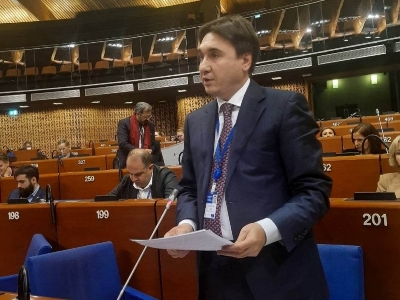
Armen Gevorgyan, a member of the Armenian National Assembly delegation, delivered an address during the debates on "the need for a renewed, rules-based international order" at the 2025 Winter Session of the Parliamentary Assembly of the Council of Europe (PACE). Gevorgyan's address is presented below.
Ladies and gentlemen,
The liberal agenda, democracy, human rights, and the rule of law are receding from the international agenda as we once knew. Economic crises, the social media revolution, and the rise of far-right and far-left populism have led to severe polarization within European states and, as a consequence, to weaker Europe as a whole.
More often than not we see that in Europe our shared sense of interests and aspirations is often expressed more clearly through opposition to someone rather than in aspirations toward something. The range of developmental choices, especially for small states, has been reduced to the unacceptably simplistic dichotomy of "with us or against us." Worse so, the strategic choices made in Europe also lack consistency in terms of interests pursued. For example: the war in Ukraine is met with categorical resistance; yet Turkey’s imperial ambitions in Syria are met with understanding. Meanwhile, Azerbaijan’s occupation of Armenia’s sovereign territories, the ethnic cleansing of Armenians from Artsakh [(Nagorno-Karabakh)], and the show-trials of Nagorno-Karabakh leaders in Baku are curiously perceived in the democratic world as something legitimate. Europe supported the right to self-determination in Kosovo, while denying it for Armenians of Artsakh.
What is this if not a consequence of serious identity and leadership crisis in Europe?
Dear Colleagues,
In Armenia today a reality is taking shape that can be summarized as: "We go to the West, but at Russia's expense." Many here recognize that this approach is fraught with new risks and challenges to regional stability and prosperity. Responsible policymaking should acknowledge that the ongoing global crisis seems to be leading toward a "Yalta-2" conference—an effort to avert a Third World War and shape a new world order. It's highly probable that a trio of leaders will once again dominate discussions, particularly on Eurasian affairs. Yet, it would be deeply regrettable if Europe were excluded from these critical conversations.
When Europe falters—both internally and in its foreign policy—by failing to uphold its own standards of democratic governance, the rule of law, and human rights, it risks losing its very identity and value-added we bring to the world. This diminishes Europe to the status of a regional player, stripped of any unique contribution to offer. Internal political and identity crises across European states, growing disunity on key issues, and the broader challenges previously mentioned are exacerbating this decline.
To conclude, I would like to address a single, but vital question: How can the Council of Europe contribute to restoring Europe’s political identity and advancing a more rules-based international order, both within and beyond its borders?